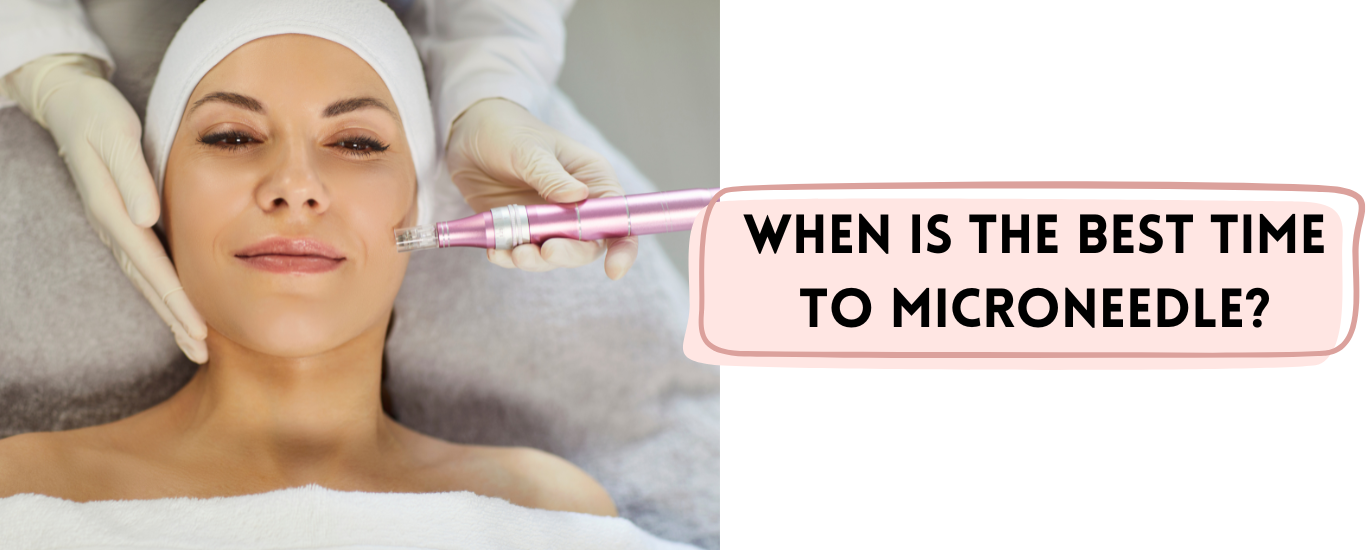
When Should You Microneedle? Timing Your Treatment for Better Skin
Quick answer: Evening microneedling is often more practical because it limits immediate UV exposure and gives your skin overnight to recover. The best timing still depends on your schedule, your skin, and how closely you can follow aftercare.
Scheduling a microneedling session seems straightforward – book an appointment and show up.
But timing affects how quickly your skin heals, how well it absorbs serums, and even how visible your results become.
Your skin follows a 24-hour cycle that shifts between daytime protection and nighttime repair. In practice, timing matters most because it affects sun exposure, aftercare, and how easily you can let your skin recover.
Evening Microneedling: Pros and Cons
Pros:
- Reduces immediate UV exposure after treatment
- Gives skin uninterrupted overnight recovery time
- Makes it easier to avoid makeup, sweat, and daytime activities right after treatment
- Can simplify aftercare if you are already home for the night
Cons:
- May cause temporary discomfort that interferes with sleep
- Limits ability to monitor immediate skin reactions
- Requires advance planning if you have early morning commitments
How Your Skin’s Natural Rhythm Can Affect Recovery

Skin follows a 24 hour cycle that affects barrier function, inflammation, and repair. During the day, it’s more focused on protecting itself from UV exposure, pollution, and other environmental stressors.
At night, your skin shifts more toward recovery. Blood flow may increase during sleep, which helps deliver oxygen and nutrients involved in skin repair.
That’s one reason evening microneedling can be easier to manage. Microneedling creates tiny channels in the skin that trigger a controlled healing response, so it’s smart to reduce sun exposure right after treatment.
Doing microneedling at night also gives your skin several hours to calm down before the next day. It doesn’t mean evening is the only good time for microneedling, but for many people, it’s the most practical choice for recovery, aftercare, and sun protection.
Why Evening Microneedling Often Works Better
Overnight Recovery Time
Evening treatment gives your skin several uninterrupted hours to rest before makeup, exercise, sweating, or sun exposure become a factor again. That practical recovery window is one reason many people find evening sessions easier to manage than morning ones.
Reduced Risk of Sun Damage and Pigmentation
Freshly needled skin has a compromised barrier for the first 48–72 hours, so it’s more vulnerable to UV-triggered inflammation and post-inflammatory hyperpigmentation.
Studies show that removing/disrupting the stratum corneum lowers the skin’s MED, indicating increased UV sensitivity compared with intact skin; therefore strict photoprotection is recommended immediately after barrier-disrupting procedures.
Evening treatments give your skin a full night to recover before the next day’s sun exposure and daily stressors. That can make aftercare easier to manage, especially if you are trying to minimize irritation and be strict with sun protection.
Maximum Product Penetration When It Matters Most
Transepidermal water loss can rise in the evening as the skin barrier temporarily weakens. This can contribute to overnight dehydration, but after microneedling, it may also make the skin more receptive to the right products.
Microneedling can increase how much topical products penetrate the skin, which is why gentle hydrating and repair-focused formulas are often preferred right after treatment.
When to Choose Morning Microneedling
For Highly Reactive or Sensitive Skin
Some people experience significant flushing, swelling, or heat sensation after microneedling. If you fall into this category, treating in the morning gives you daylight hours to monitor your reaction, apply cooling compresses, and use calming products as needed. By evening, much of the initial inflammation may have subsided, allowing for more comfortable sleep.
When You Control Your Daytime Environment
Working from home or having a flexible schedule can make morning treatments easier to manage because it’s simpler to stay indoors, avoid makeup, and follow aftercare closely.
For Those with Better Morning Skincare Habits
If you’re most alert in the morning and more likely to follow through with detailed aftercare routines early in the day, schedule your treatment when you’re at your best. Consistency in applying serums, avoiding irritants, and protecting your skin matters more than perfect timing.
How Skin Type Can Influence Timing
Skin type can affect comfort and aftercare needs, but it does not create a strict best time of day rule for everyone.
In practice, the better time is the one that lets you avoid sun exposure, skip makeup, stay away from irritants, and follow aftercare properly.
If your skin is reactive, morning sessions can make it easier to monitor how you respond. If your main concern is convenience and uninterrupted recovery time, evening may suit you better.
Seasonal Factors That Influence Microneedling Timing
Summer: Choose Evening Sessions
UV intensity, longer daylight hours, and increased outdoor activity make morning summer treatments risky. Even brief sun exposure during the vulnerable 48-hour healing window can trigger inflammation and hyperpigmentation.
Evening sessions are often the easier option during summer months because they reduce immediate post-treatment sun exposure.
If you choose a morning session, keep sun exposure as low as possible and be strict with broad-spectrum sunscreen and other sun protection.
Winter: More Scheduling Flexibility
Shorter days, weaker UV angles, and more time spent indoors reduce sun-related risks. Morning winter treatments can be easier to manage, especially if you can stay indoors and keep sun exposure low.
Combat winter’s dry air with a humidifier running overnight and throughout the day. Use richer moisturizers than you would in summer to prevent transepidermal water loss from worsening post-treatment dryness.
Spring and Fall: Balance Based on Activities
Transitional seasons offer moderate conditions suitable for both morning and evening timing. Choose based on your schedule and skin’s current behavior. Spring may be ideal for a treatment series preparing your skin for summer sun exposure, while fall sessions can address summer damage and prep for winter dryness.
How Treatment Frequency Affects Optimal Timing
At-Home Devices: Weekly Evening Routine
At-home rollers and stamp devices usually use shorter needles than professional treatments.
Evening sessions can be easier to manage because you have more time for careful technique and overnight recovery. Keep the frequency conservative, and follow the device instructions and how your skin responds.
Evening treatments also let you apply serums and sleep without working around daytime activities. With at-home devices, consistency matters more than intensity.
If you’re still choosing a tool, see these best microneedling devices for home use before you set a treatment schedule.
Professional Sessions: Plan Around Your Calendar
Professional microneedling sessions are usually spaced several weeks apart to allow healing. If you work a traditional schedule, booking later in the week can make recovery easier to manage.
If you have an important event, book your session 2-3 weeks prior for optimal results without residual irritation.
Maintenance Phase: Quarterly Flexibility
Once you’ve achieved desired results through a treatment series, maintenance sessions every 2-3 months preserve improvements. At this stage, you have more flexibility with timing since you’re familiar with how your skin responds.
Lifestyle Considerations for Scheduling
Night Owls: Early Evening Works Best
If you regularly stay up past midnight, scheduling treatment at 6-7 PM gives your skin several hours of initial healing before sleep. This timing also lets serums absorb fully before lying on a pillow.
Early Risers: Morning Can Work
Morning people who wake naturally at dawn may find it easier to follow post-treatment protocols if they microneedle in the morning. The key is avoiding makeup and sun exposure for the remainder of the day.
Irregular Schedules: Choose Consistency Over Perfection
Shift workers, freelancers, and travelers should prioritize scheduling treatments when they can guarantee proper aftercare. Consistent post-treatment care matters more than whether you treat at 9 AM or 9 PM.
Fitness Enthusiasts: Avoid Pre- or Post-Workout Windows
Avoid heavy sweating and intense exercise right after microneedling, since sweat, friction, and heat can make freshly treated skin more uncomfortable.
If you work out daily, treat in the evening after your session or on rest days.
The Critical 72-Hour Recovery Window
Hours 0-24: Gentle Protection
Immediately after microneedling, your skin barrier is more vulnerable and your skin may be more reactive than usual.
Cleanse only with lukewarm water and your fingertips. No washcloths, brushes, or cleansing devices. Use a gentle hydrating product if your skin tolerates it.
Skip all active ingredients: no retinoids, vitamin C acids, or exfoliants. If you must go outside, use a broad-spectrum sunscreen and keep sun exposure as low as possible. Avoid all makeup.
Hours 24-48: Support Repair
Continue gentle cleansing and keep the routine simple with bland, hydrating, barrier-supportive products.
If redness persists beyond 24 hours or worsens, contact your healthcare provider.
Hours 48-72: Gradual Return to Normal
If your skin feels calm, gradually return to your normal routine, starting with the gentlest products first. Continue diligent sun protection even if you’re primarily indoors.
Some people notice smoother texture and a fresher look within days, while collagen-related improvements usually take longer.
Planning Microneedling Around Special Events
2-3 Weeks Before: The Sweet Spot
Schedule your treatment 14-21 days before weddings, photo shoots, or important presentations. This timeframe allows complete healing, gives new collagen time to form, and provides a buffer if you need adjustments.
You’ll see improvements in texture, pore size, and overall radiance without any residual redness or flaking.
1 Week Before: Risky but Possible
A treatment seven days out can work if you’ve had microneedling before and know exactly how your skin responds. You’ll benefit from increased blood flow and cellular turnover, creating a fresh, glowing appearance.
However, if you’ve never tried microneedling, don’t experiment with this timing. Everyone’s healing rate differs, and you don’t want to risk visible irritation on your important day.
1 Month or More: Plan a Series
For significant concerns like acne scars, deep wrinkles, or extensive sun damage, schedule a series of 3-4 treatments spaced four weeks apart, finishing at least one month before your event. Multiple sessions produce cumulative collagen remodeling that single treatments can’t match.
Day Before or Day Of: Never
Attempting to microneedle immediately before a special event almost guarantees red, swollen, potentially bleeding skin. Even if redness fades faster than expected, your barrier will be compromised and makeup application risky. Avoid this timing completely.
Comparing At-Home vs Professional Treatment Timing
| Factor | At-Home (0.25-0.5mm) | Professional (1.0-2.5mm) | Clinical RF or Laser-Combo |
|---|---|---|---|
| Optimal timing | Evening, weekly | Evening, 4-6 weeks apart | Afternoon/evening, 6-8 weeks apart |
| Recovery period | 24-48 hours | 3-5 days | 5-7 days |
| Makeup restriction | 24 hours | 24-48 hours | 48-72 hours |
| Sun sensitivity | Moderate (3-5 days) | High (7-10 days) | Very high (14+ days) |
| Best for | Maintenance, product absorption | Texture, scars, wrinkles | Deep scars, significant laxity |
Check with a dermatologist before microneedling if:
- You have active acne, rosacea, eczema, a skin infection, or broken skin
- You are using isotretinoin or have used it recently
- You have a history of keloid scarring or pigment problems after skin injury
- You are pregnant or breastfeeding and want personalized guidance before trying a barrier-disrupting treatment
- You are not confident you can avoid sun exposure and follow careful aftercare afterward
Skip at-home microneedling and get professional advice first if your skin is currently inflamed, infected, actively breaking out, prone to keloids, or otherwise not stable enough for a barrier-disrupting treatment.
Finding Your Ideal Microneedling Time: Decision Guide
| Your Situation | Recommended Timing | Key Considerations |
|---|---|---|
| Early riser + Can avoid makeup/sun 8+ hours | Morning | Use zinc sunscreen, stay indoors |
| Early riser + Cannot avoid makeup/sun | Evening | Better sun protection |
| Night owl | Early evening (6-7 PM) | Allows healing before sleep |
| Reactive skin | Morning | Easier to monitor how your skin responds |
| Busy daytime schedule | Evening | Easier to avoid sun, makeup, and daily activities afterward |
| Sensitive skin | Test both | Compare results |
| Flexible routine | Either | Choose the time that makes aftercare easiest |
| Event in 2+ weeks | Schedule now | Optimal results window |
| Event in 1 week | Only if experienced | Know your healing time |
| Event in <1 week | Wait | Too risky |
Conclusion: Choosing the Right Microneedling Time for Your Skin
The best time to microneedle depends mostly on your schedule, your skin’s sensitivity, and how well you can protect and care for your skin afterward.
Evening sessions are often easier to manage because they reduce immediate UV exposure and give your skin overnight recovery time before the next day’s usual stressors.
Morning treatments can work well if you have reactive skin that benefits from daytime monitoring, or if your schedule makes consistent evening aftercare difficult.
Rather than chasing perfect timing, focus on consistent post-treatment care: gentle cleansing, targeted hydration, strict sun avoidance, and patience while new collagen forms. Your skin’s healing capacity matters more than the hour on the clock.
People Also Asked
What is the best time of day to microneedle?
The best time of day to microneedle varies from person to person. Many people find evening sessions easier because they reduce immediate sun exposure and give skin overnight recovery time. Morning can still work if you can stay indoors, skip makeup, and follow aftercare carefully.
How often should I microneedle?
The frequency of microneedling depends on the needle length and your skin’s needs.
For at-home treatments with shorter needles, frequency should stay conservative and depend on the device, needle length, your skin’s response, and the brand’s instructions.
Can I microneedle in the morning?
Yes, if you can stay out of the sun, avoid makeup, and keep the rest of the day low-friction and low-sweat. Morning sessions are usually more about convenience and monitoring than about better results.
Is it better to microneedle at night?
Many people prefer microneedling at night because it can make aftercare easier and reduce immediate sun exposure. However, the best time depends on your skin and lifestyle factors.
How long after microneedling can I apply skincare products?
You can apply gentle, hydrating skincare products immediately after microneedling. However, wait at least 24 hours before using any active ingredients like retinol or vitamin C.
Does microneedling work better in winter or summer?
Microneedling can be effective year-round, but many find winter ideal because of reduced sun exposure. Summer treatments require extra caution with sun protection.
How soon before an event should I microneedle?
For optimal results, schedule your last microneedling session at least 2-4 weeks before a major event. This allows time for your skin to heal and reveal its full glow.
Can I microneedle before a vacation?
It’s best to microneedle at least a week before traveling, especially if you’re heading to a sunny destination. This gives your skin time to heal and reduces the risk of irritation or sun damage.
How does the time of day affect microneedling results?
Time of day mostly affects how easy it is to manage aftercare. Evening can reduce immediate UV exposure and give skin overnight recovery time, while morning can be easier if you want to monitor how your skin responds.
Disclaimer: The information here is educational and not a substitute for professional medical advice. If you have a skin condition or are considering procedures like microneedling, speak with a dermatologist first. Stop use and seek medical advice if irritation occurs; always use broad-spectrum sunscreen after any barrier-disrupting treatment.
