ViQure S-LD Laser Hair Removal Device Review: Is It Worth Switching From IPL?
If you’ve spent months using IPL only to watch the hair return once you stop maintenance treatments, it’s natural to start looking for a stronger at-home hair removal option.
Coarse dark hair can be especially stubborn, while repeated shaving often leads to ingrown hairs, razor burn, and lingering dark marks. The ViQure S-LD delivers up to 25 J/cm² – a much higher output than typical at-home IPL devices. It also cools the skin during treatment, which can make the higher energy levels more comfortable.
So, is the ViQure S-LD actually worth upgrading from IPL, and does the extra power translate into better results? Let’s take a closer look.
Disclosure: This article is reader-supported and contains affiliate links. We may earn a commission on qualifying purchases at no extra cost to you. Read more.
What Is the ViQure S-LD Laser Hair Removal Device?
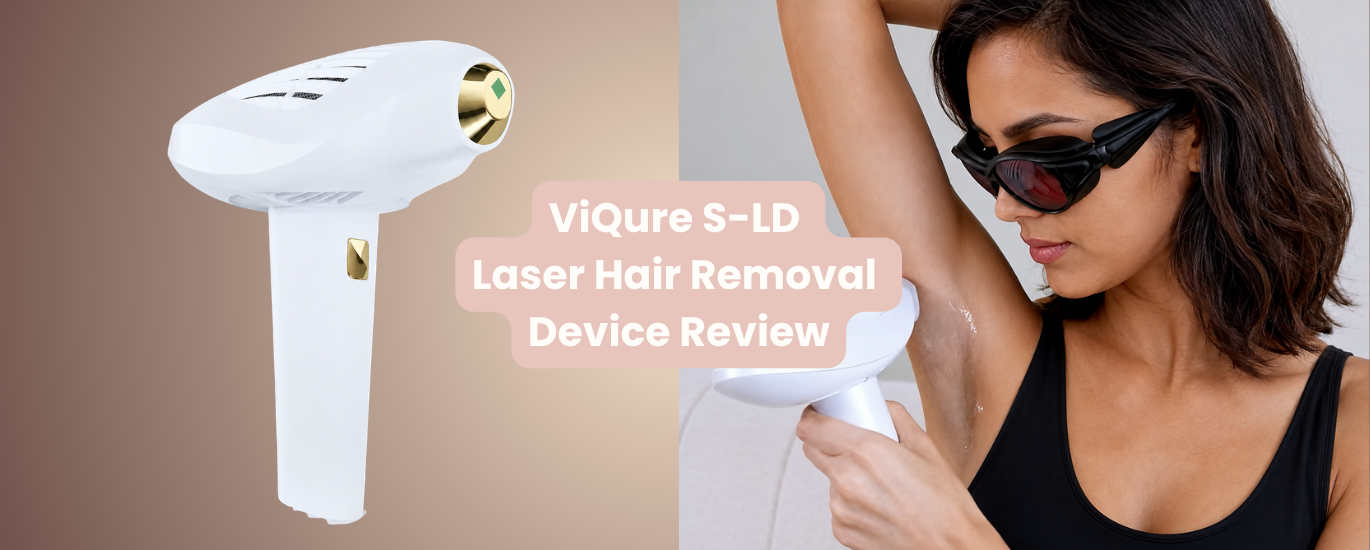
The ViQure S-LD is a corded handheld device designed for treating unwanted hair at home. It uses what ViQure calls super-light emitting diode technology, with five energy levels, continuous skin cooling and a compact 8 × 8 mm treatment window.
Its smaller window offers more control around areas such as the bikini line, underarms and face, although covering the legs or other large areas will take longer.
The device plugs into a wall outlet, so its output doesn’t depend on battery charge. It also uses a fixed light source, which means there are no replacement lamps or cartridges to purchase.
The package includes a power adapter, razor, protective goggles and user manual.
Is the ViQure S-LD a Real Laser?
Although the S-LD is not a true diode laser like the Tria 4X, its near-infrared diode LED operates very differently from standard home IPL. It delivers light within a focused 780–850 nm range and reaches up to 25 J/cm², far above the 3 to 6 J/cm² commonly produced by IPL devices.
ViQure’s optical guide directs this energy through a compact 8 × 8 mm window, allowing you to treat coarse, dark hair with greater precision. Continuous cooling supports the higher energy levels, particularly on sensitive areas such as the bikini line and underarms.
These features make the S-LD a compelling step up if standard IPL slowed your hair growth but left you dependent on frequent maintenance.
Why the ViQure S-LD May Work Better Than IPL for Coarse Hair
At-home IPL hair removal works best when hair is in the active growth phase, also known as anagen. Since hairs enter this phase at different times, repeated sessions are needed to treat more follicles while they contain enough pigment to absorb the light.
If coarse, dark hair keeps returning despite consistent IPL treatments, each pulse may be slowing follicle activity without producing the level of long-term hair reduction you expected.
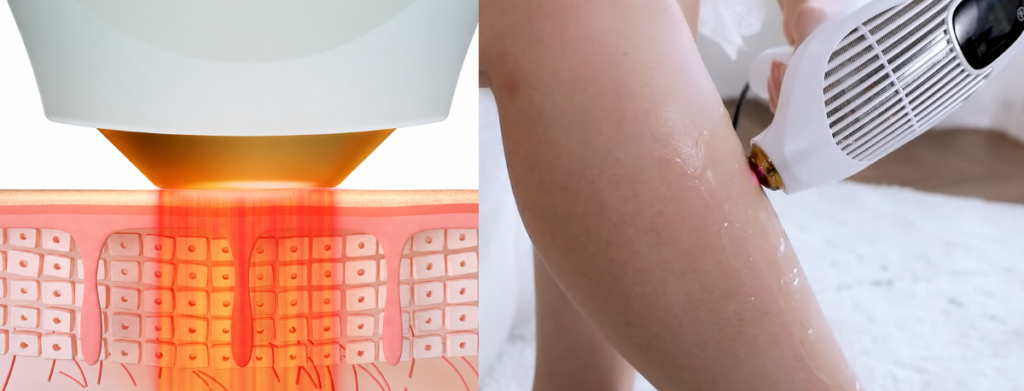
The ViQure S-LD addresses this with higher fluence concentrated over a small treatment area. Dark hair can absorb this energy and convert it into heat within the follicle, which may improve the response of stubborn hair on the bikini line, underarms and other areas that produced limited results with IPL. Continuous cooling also makes the stronger energy levels easier to tolerate.
Note that no independent study has directly compared ViQure S-LD results with at-home IPL, so maintenance-free hair removal cannot be guaranteed. However, its higher output makes it a persuasive alternative for coarse, dark regrowth when standard IPL has only delivered temporary or limited reduction.
Does the ViQure S-LD Hurt? Comfort and Cooling
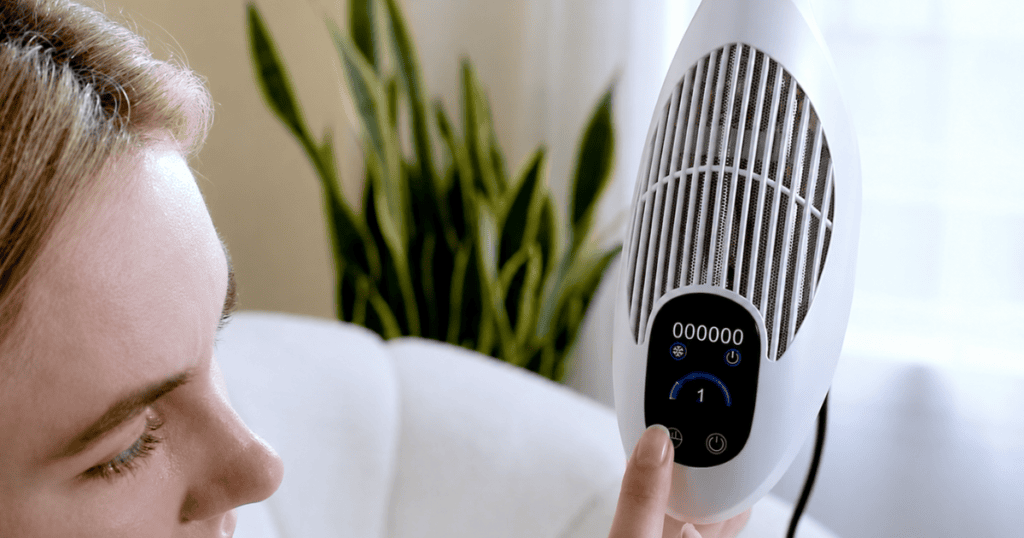
For anyone who’s already used IPL on the bikini line, pain is usually the first concern. The good news is that reviewers often describe the ViQure S-LD as gentler than expected, with some reporting less discomfort than both home IPL and professional laser treatments.
A big reason is the 360-degree cooling technology, which keeps the treatment surface between 32 and 50°F while you use it. Your skin stays cool as the light targets the follicle beneath it, taking the edge off the heat that can make higher-powered treatments uncomfortable.
The beam is also spread evenly across a rectangular treatment spot rather than delivered as a broad IPL flash. That can reduce the sharp, concentrated snapping sensation many people associate with IPL.
For smaller or curved areas such as the bikini line and upper lip, the diamond-shaped window makes it easier to keep the treatment area close to the skin without awkward positioning.
Pain levels will still depend on the area, hair density, and your skin. ViQure recommends starting at level one, doing a patch test, and increasing the energy gradually. If a level feels uncomfortable, drop back rather than pushing through it.
ViQure S-LD Results Timeline and What Changes First
With the ViQure S-LD, you may notice slower regrowth and finer hair before you see larger areas staying hair-free.
ViQure currently recommends three to five S-LD treatments spaced four to six weeks apart. The results develop gradually across the treatment course rather than after a single session.
ViQure also describes a full course as four to six treatments. The gap between sessions is meant to target more hairs while they’re in the active growth phase.
After the treatment course, ViQure says hair may stay away for one to two years. Hair that returns may also be lighter and finer, and occasional touch-ups may be needed.
👉 Check Today’s ViQure S-LD Price and Availability
Is the ViQure S-LD Safe for Your Skin Tone and Hair Color?
Skin tone and hair color have a big influence on how well light-based hair removal works.
The goal is to heat melanin in the hair follicle without sending too much heat into melanin in the surrounding skin, which is why darker complexions require more careful wavelength and energy control. Longer wavelengths are generally better suited to darker skin than shorter-wavelength systems.
Which Hair Colors Work Best?
The ViQure S-LD works best on black and brown hair because darker hair contains more melanin for the light to target. ViQure warns that results may be limited on blonde, red, gray and white hair, which matches broader laser hair removal guidance from dermatologists.
For fine, light facial hair that doesn’t contain enough pigment for the S-LD, an at-home dermaplaning device like the Sonicsmooth offers a temporary way to remove visible surface hair.
Using the ViQure S-LD for PCOS Facial Hair
PCOS facial hair often returns because light-based treatment reduces existing growth without changing the hormones that stimulate new hairs. Even so, the international PCOS guideline supports laser and light therapies for facial hirsutism, although additional sessions may be needed.
For dark, coarse hair, the ViQure S-LD has plenty of appeal. Its small treatment window offers precise coverage around the upper lip and sideburns, while continuous cooling makes repeat sessions easier on sensitive skin. Blond, gray and white hairs lack enough pigment to respond well, so electrolysis is usually more suitable.
Expect reduced density and finer regrowth rather than permanent PCOS hair removal. Maintenance may still be necessary.
There is also a rare risk of paradoxical hypertrichosis, where treatment stimulates more hair. A systematic review found a pooled rate of about 3%, mainly on the face and neck, although this figure wasn’t specific to the S-LD.
Where Should You Avoid Using It?
Don’t use the ViQure S-LD directly over tattoos. ViQure says you can treat the surrounding skin, but the tattoo itself should be skipped.
Recently tanned skin also needs extra caution because tanning increases melanin at the skin surface, giving the light more pigment to absorb before it reaches the follicle.
How to Use the ViQure S-LD at Home
- Shave the treatment area 24–48 hours beforehand. Removing surface hair helps prevent singeing and allows more of the light energy to reach pigment within the follicle. ViQure’s manual notes that approximately 1–2 mm of hair can remain.
- Clean the skin and remove lotion, oil, deodorant, sunscreen, and other products. Apply hair-removal gel to the treatment area as directed in the manual.
- Put on the supplied protective goggles before operating the light. Keep them on throughout the treatment, even when working on body areas.
- Test a small area at a low setting before completing your first treatment and monitor the skin for a delayed reaction. The S-LD is intended for Fitzpatrick skin types I–V and shouldn’t be used on type VI.
- Use single-pulse mode for smaller or more sensitive areas such as the upper lip, underarms, and bikini line. Continuous mode is designed for larger areas such as the arms and calves.
- Hold the treatment window firmly and perpendicular to the skin. Follow the manual’s recommended intensity and number of passes, and don’t leave the window over one area for an extended period.
- Rinse the treated skin with clean water and apply a soothing, fragrance-free moisturizer. Protect exposed areas from UV and apply a broad-spectrum sunscreen because recently treated skin may be more prone to irritation and pigment changes.
Using the ViQure S-LD Skin Rejuvenation Mode
The S-LD also includes a facial mode that ViQure promotes for dullness, rough texture, fine lines and enlarged-looking pores. The brand recommends using levels one or two once every seven days for six to ten sessions.
If you use both functions on your face, the timing changes. After a hair removal treatment, wait at least 20 days before using skin rejuvenation mode. After a rejuvenation session, wait seven days before using either function again.
This feature adds more use to the handset, although the evidence behind it comes from ViQure. It’s best viewed as an extra rather than a replacement for retinol serums or professional skin treatments.
ViQure S-LD Side Effects and Safety
A little redness, warmth or temporary flushing can happen after treatment and usually settles fairly quickly. More persistent irritation, blistering or changes in pigmentation fall outside that normal post-treatment response.
There are also a few reasons the S-LD may not be suitable for everyone. Certain medications can make skin more sensitive to light, while pregnancy, active skin conditions, keloid scarring and photosensitivity can affect whether light-based hair removal is appropriate.
ViQure also includes protective goggles with the device, and its safety guidance calls for eye protection during treatment. If any of the health-related exclusions apply to you, the safest reference point is the manufacturer’s guidance and advice from a qualified clinician.
ViQure S-LD Pros and Cons
Pros
- Up to 25 J/cm² giving dark, coarse hair a higher-output option when standard IPL has produced limited reduction.
- Narrow 780 to 850nm beam directs more energy to the follicle than broad-spectrum IPL
- The cooling plate is rated between 32 and 50°F, which helps offset the heat produced at stronger energy levels.
- Diamond-shaped window follows the bikini line, underarms, and upper lip closely
- Rapid flash at 3Hz cuts down treatment time on legs and arms
- No cartridges or lamps to replace, with LED chips rated at 100 million flashes
- Facial rejuvenation function for dullness and rough texture included alongside hair reduction
Cons
- The 8mm by 8mm window is small, so full legs still take time
- White, gray, light blond and red hair may respond poorly because they contain less melanin
- Not suitable for Fitzpatrick type VI
- Requires gel and access to an outlet
Is the ViQure S-LD Laser Hair Removal Device Worth It?
The ViQure S-LD is worth considering if at-home IPL reduced your hair but left you relying on frequent maintenance treatments.
Its higher fluence gives coarse, dark hair a stronger at-home option, while the focused 780–850 nm output and compact treatment window provide greater control around the bikini line, underarms and upper lip.
Continuous cooling can make higher energy levels more comfortable on sensitive areas. ViQure recommends three to five sessions, spaced four to six weeks apart, rather than the weekly treatment schedule common with many IPL devices.
That schedule may be easier to maintain, although results still depend heavily on hair color and skin tone. The S-LD is unlikely to work well on blond, red, gray or white hair, and it isn’t suitable for Fitzpatrick type VI. Hormonal facial hair may also require occasional top-ups.
For stubborn dark hair that hasn’t responded well to standard home IPL, the ViQure S-LD offers a convincing step up in energy and precision without committing to regular costly laser clinic appointments.
Health Disclaimer: This article is for general informational purposes only and is not medical advice. At-home laser and light-based hair removal may not be suitable for everyone, especially if you have a medical condition, take medications that increase light sensitivity, are pregnant, or have concerns about your skin. Always follow the manufacturer’s instructions and speak with a qualified healthcare professional if you’re unsure whether a device is suitable for you.
