
DermRays Revive Review: Does It Really Work for Wrinkles?
Curious about laser facials for smoother lines and firmer-looking skin? The DermRays Revive is a handheld 1064nm laser that brings similar technology to your home, with treatments designed to take just 10 minutes.
In the brand’s eight-week study, 96% of participants saw smoother fine lines and wrinkles, while 90% reported a brighter, more even skin tone and less noticeable dark spots
Serums can help hydrate the skin, but they can’t work on deeper layers in the same way laser treatments can.
DermRays Revive uses non-ablative laser technology to target concerns such as collagen loss, uneven pigmentation and rough skin texture without removing the skin’s surface. In this DermRays Revive review, I’ll look at the brand’s study results, what customers are saying, how the 1064nm laser works and how it compares with NIRA Pro 3 and LYMA Laser.
Disclosure: This post contain affiliate links. As an Amazon Associate I earn on qualifying purchases at no extra cost to you.
At-Home Laser Skincare
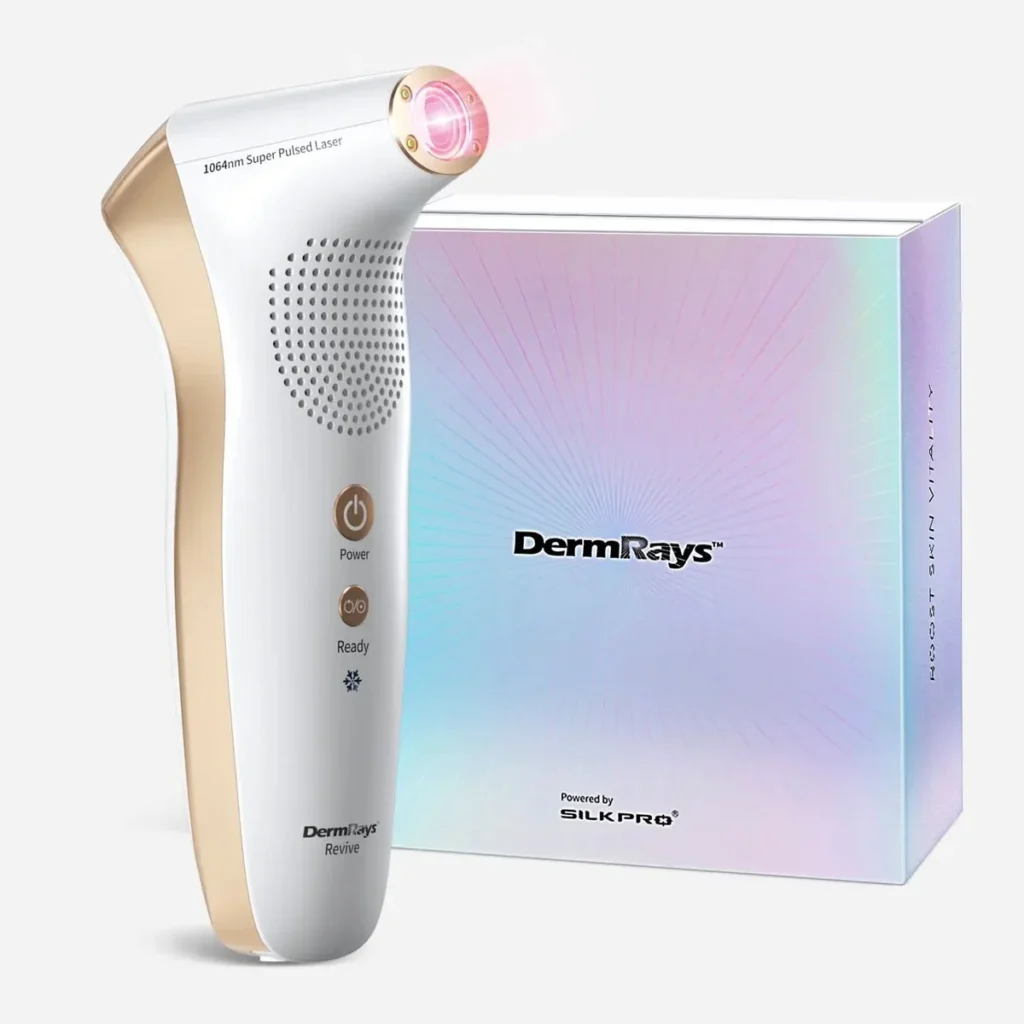
DermRays Revive
A 1064nm non-ablative laser designed for smoother fine lines, firmer-looking skin and a more even complexion, with built-in cooling for comfortable 10-minute treatments.
Best for: Crow’s feet, forehead lines, sun spots and uneven texture
Not ideal for: Melasma, active rosacea or anyone hoping for a surgical-style lift
Technology: 1064nm diode laser, up to 10 J/cm², thermoelectric cooling
Session time: Approximately 10 minutes
Check DermRays Revive Price & AvailabilityWhat We Like
- Same 1064nm wavelength as clinic lasers
- Targets dark spots as well as wrinkles
- Built-in cooling, three energy levels
- 10-minute sessions, monthly after week five
- FDA 510(k) cleared, skin types I to VI
- No treatment consumables
What We Don’t Like
- Results take time
- Not for melasma or rosacea without advice
- Premium price
What Is DermRays Revive?
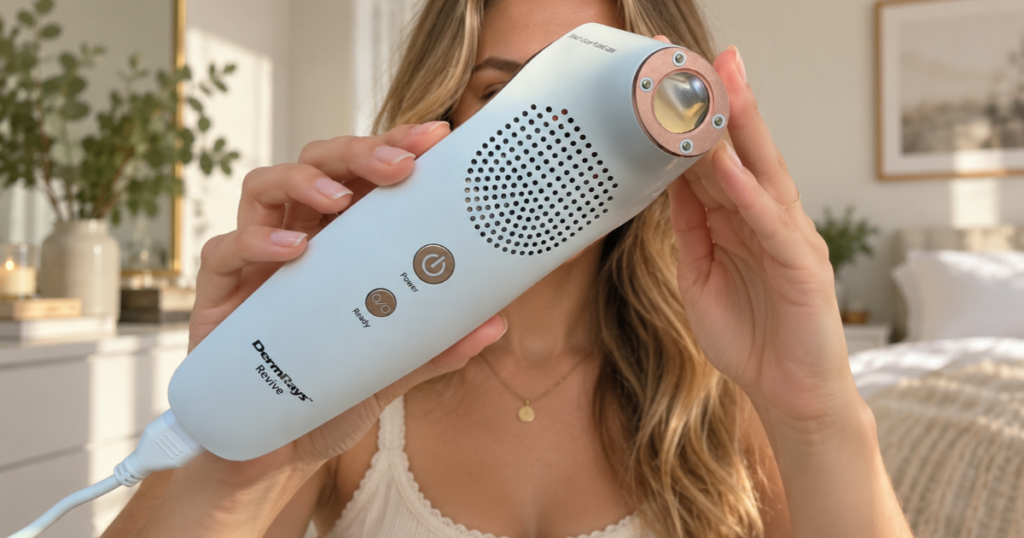
DermRays Revive uses a 1064nm non-ablative diode laser designed to soften the look of wrinkles, dark spots and uneven skin texture. It shares a wavelength with some clinic Nd:YAG lasers but uses different laser technology, with built-in thermoelectric cooling and three energy levels.
The laser is designed to warm the dermis and encourage collagen remodeling without disturbing the skin’s surface, so there’s no peeling or downtime. Sessions take around 10 minutes, and DermRays recommends a five-week starter schedule followed by maintenance once or twice a month. It’s intended for Fitzpatrick skin types I to VI.
Does DermRays Revive Really Work? The Clinical Results
DermRays Revive showed improvements in the appearance of wrinkles, dark spots and skin texture in the brand’s eight-week study. According to the results, 96% of participants reported smoother fine lines, while 90% noticed a more even skin tone.
DermRays also published findings from a 56-day assessment involving 28 adults aged 33 to 59, including measured skin changes.
In that assessment, DermRays reported a 26.37% reduction in the number of crow’s-foot wrinkles, a 25.82% decrease in their size and an 18.08% improvement in cheek smoothness over eight weeks.
I like seeing numbers like these because they give a clearer idea of what the treatment might achieve. Having around a quarter fewer crow’s-foot wrinkles after two months could be noticeable in the mirror or photos, although there’s no guarantee everyone will see the same changes. DermRays also recommends a maintenance schedule to help preserve the results.
It’s worth keeping in mind that these are brand-reported findings, not independent research. The results are encouraging, but the studies are relatively small. They also broadly match what 1064nm laser treatments are used for in clinics, including improving the appearance of fine lines, wrinkles and uneven skin texture.
DermRays Revive Results for Fine Lines and Crow’s Feet
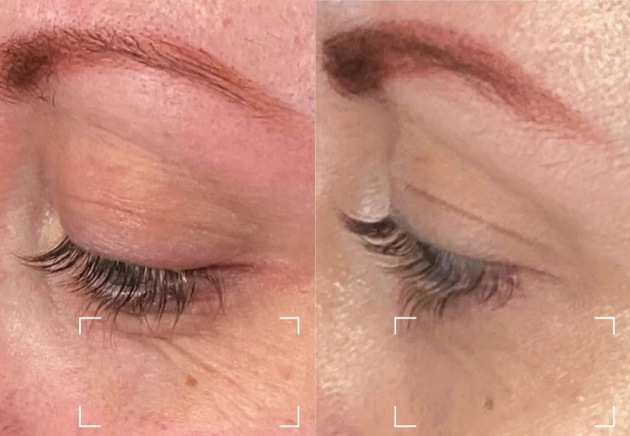
Fine lines and wrinkles are the strongest reason to consider DermRays Revive, particularly around the forehead and the outer corners of the eyes.
The laser is designed to encourage collagen remodeling beneath the skin, where the proteins responsible for firmness and elasticity are found.
As collagen changes with age, fine lines and wrinkles, including expression lines, can become more noticeable even when the skin is well hydrated. Non-ablative laser treatments aim to improve the skin’s underlying structure rather than simply moisturize its surface.
DermRays’ reported reductions in crow’s-foot wrinkles suggest that repeated treatments may help soften these lines over time.
For anyone who loves their skincare but wants to address more than dryness, this is where the technology becomes particularly attractive.
Firmer-Looking Cheeks and Jawline
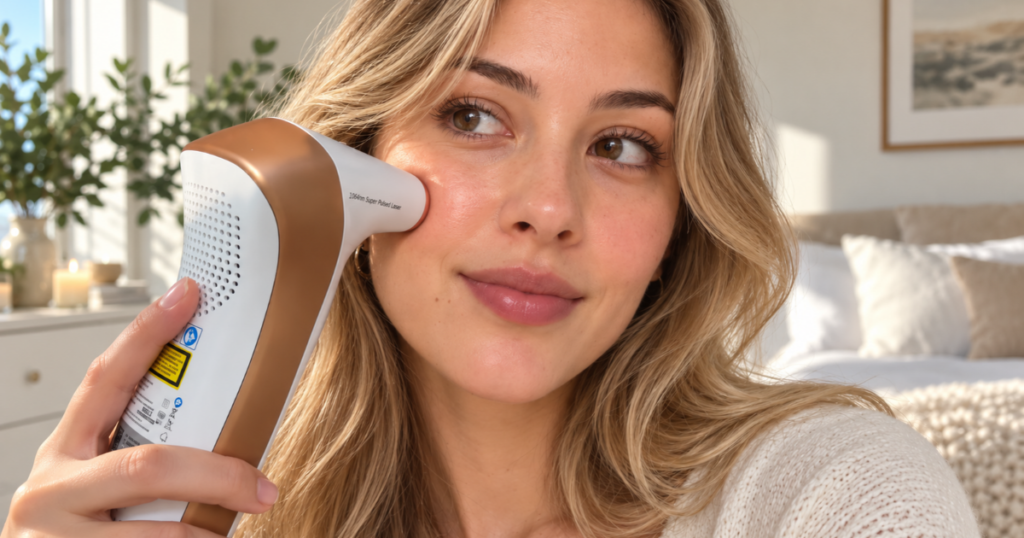
DermRays markets Revive for firmer-looking skin, especially if you’re starting to notice early signs of sagging around the cheeks and jawline. Its 1064nm laser is designed to support collagen remodeling, which may improve skin firmness while also softening the appearance of fine lines and wrinkles.
DermRays lists firmer skin among its reported benefits, and several customer reviews mention cheeks that look tighter and skin that feels more supple after regular treatments.
I wouldn’t expect the kind of lifting you’d get from an in-clinic procedure, particularly if you have significant skin laxity. But for early changes around the cheeks and jawline, Revive offers another approach to improving skin firmness alongside other at-home face sculpting tools.
Dark Spots and Uneven Skin Tone
Fading dark spots and improving uneven skin tone is another reason to consider DermRays Revive, especially if you’re dealing with sun damage or age spots alongside fine lines. Unlike topical treatments such as vitamin C serums for dark spots, Revive uses laser energy to target discoloration beneath the skin’s surface.
The 1064nm wavelength has been used in dermatology for years to treat certain types of pigmentation. In DermRays’ eight-week study, 90% of participants reported improvements in dark spots and overall skin tone. If sun exposure has left your complexion looking patchy or dull, a more even skin tone could make a noticeable difference.
There’s one thing to be careful about, though. Melasma can worsen with heat-based treatments, and not every type of pigmentation responds to lasers in the same way. If you’re dealing with melasma, it’s best to speak with a dermatologist before trying an at-home laser.
👉 See Current Deals on the DermRays Revive
Pores and Skin Texture
DermRays Revive may also help enlarged pores look less noticeable by improving skin texture and firmness. In the brand’s eight-week assessment, participants saw an 18.08% improvement in cheek smoothness, which could mean a more even-looking complexion with fewer visible rough patches.
Pores may appear smaller when the surrounding skin looks smoother and firmer. This could make a noticeable difference if you’re dealing with uneven skin texture, enlarged pores or makeup that settles into fine lines throughout the day.
If your foundation starts looking patchy by mid-afternoon, smoother skin texture could help it sit more evenly. It’s a subtle change compared with wrinkle reduction, but one you may notice when applying makeup or looking at your skin up close.
DermRays Revive Before and After Results
DermRays also shares before-and-after photos of crow’s feet, nasolabial folds and cheek texture, giving you a closer look at the improvements reported in its studies. What stands out is how natural the changes look.
Fine lines appear softer, and the cheeks look smoother without a dramatic difference in facial appearance. That’s the kind of gradual improvement you might expect from a non-ablative laser used consistently over several weeks.
I’d pay particular attention to the fine lines around the outer corners of the eyes and the texture of the cheeks. These are areas where even small improvements can make skin look smoother and more youthful. The photos come directly from DermRays, so they aren’t independent proof of results, but they do help show what the treatment may achieve.
How Does the DermRays Revive 1064nm Laser Work?
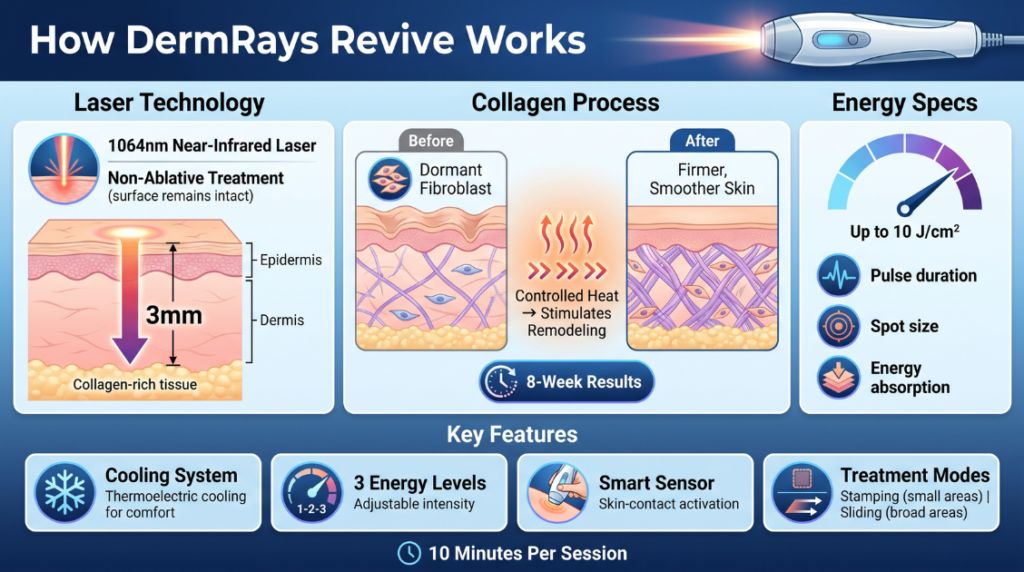
DermRays Revive uses a 1064nm near-infrared laser to deliver controlled heat beneath the skin’s surface, which may help support collagen remodeling.
This is known as non-ablative laser therapy. Unlike ablative treatments that remove or damage the outer layers of skin, non-ablative lasers work without intentionally removing the skin’s surface.
The 1064nm wavelength is also used in dermatology clinics, including certain Nd laser treatments. Revive uses a diode laser at the same wavelength, but professional laser systems can operate at very different energy levels and follow different treatment protocols.
According to DermRays, the laser can reach approximately 3mm beneath the skin’s surface, where collagen-rich tissue is found.
Collagen helps keep skin firm and provides its underlying structure. Fibroblasts are the cells that produce collagen. By gently heating the tissue, non-ablative laser treatments may encourage collagen remodeling, which can help improve the appearance of skin texture and firmness over time.
What Does 10 J/cm² Energy Density Mean for DermRays Revive?
DermRays Revive delivers up to 10 J/cm² of energy density, which measures how much laser energy is delivered to a specific area of skin during treatment.
DermRays highlights this specification as one of the main features that sets Revive apart from other at-home laser and skincare devices.
But more energy doesn’t always mean better results. How a laser works also depends on its pulse duration, spot size, and how the skin absorbs the energy.
What’s more convincing to me is how DermRays pairs these laser specifications with its eight-week treatment findings. The company has published results showing potential improvements in skin texture and firmness, although those findings don’t guarantee everyone will see the same changes.
Built-In Cooling for More Comfortable Laser Treatments
DermRays Revive includes a built-in thermoelectric cooling system designed to help keep the skin’s surface comfortable during laser treatments.
Since laser energy generates heat beneath the skin, cooling can help manage surface temperature and reduce discomfort during a session.
Revive also has three adjustable energy levels, so users can start with a lower setting and gradually increase the intensity based on their skin’s tolerance.
There’s a built-in skin-contact sensor that helps control laser delivery when the device is properly positioned against the skin.
The device has two treatment modes:
- Stamping is designed for targeting smaller areas;
- Sliding makes it easier to cover larger sections of the face.
Another feature I like is the shorter treatment time. DermRays recommends sessions of approximately 10 minutes, which may be easier to work into a busy schedule than longer in-clinic appointments.
DermRays Revive Customer Reviews: What Are People Saying?
Customer reviews on the DermRays website often mention smoother texture, softer-looking wrinkles and a more even tone.
- Alexandria M., 58, bought Revive to maintain her results after professional CO2 laser resurfacing. She reports fewer visible lines and faded pigmentation from old acne scars.
- Another owner noticed smoother texture, smaller-looking pores and a more even tone after her first two weeks. She describes the sessions as quick and painless.
- Navanath S. has used Revive for eight months and says her skin looks smoother and plumper, with less noticeable fine lines.
These experiences are encouraging, particularly for anyone who enjoys beauty technology and wants to work toward longer-term improvements in skin appearance.
The reviews are published on the manufacturer’s website, so they aren’t a substitute for independent clinical evidence. They do, however, offer insight into the experiences some customers have had using Revive at home. Individual results vary.
How Often Should You Use DermRays Revive?
DermRays recommends using Revive regularly for the first five weeks, then cutting back to just one or two maintenance treatments a month. It’s a manageable schedule, especially if you want to work on fine lines, wrinkles and skin firmness without adding another daily step to your skincare routine.
For the first two weeks, DermRays recommends three to four treatments per week. During the following three weeks, you can reduce this to two or three sessions weekly. After that, maintenance drops to once or twice a month to help preserve your results.
I like that the schedule becomes less demanding over time, particularly if you’re already using serums, an LED mask or other skincare devices.
Getting started is straightforward. Cleanse your face, make sure your skin is completely dry, then turn on Revive and select the lowest energy level. Follow the manufacturer’s instructions for stamping or sliding the laser across the approved treatment areas.
DermRays recommends beginning at level one and increasing the intensity only as your skin tolerates it.
The biggest reason to stick with the treatment schedule is that collagen changes take time. You might notice improvements in skin texture earlier, but the brand’s main study measured results after eight weeks. That’s a more reasonable point to judge how well Revive is working for your skin.
I’d also suggest taking a photo before your first treatment and another every couple of weeks, using the same lighting and angle. Small changes in crow’s feet, cheek texture and overall skin tone can be hard to spot day to day, but comparing photos may help you see whether your skin is improving.
Is DermRays Revive Safe for All Skin Tones?
DermRays Revive is designed for Fitzpatrick skin types I–VI, covering skin tones from very fair to deep.
Its 1064nm laser wavelength has lower melanin absorption than some shorter wavelengths, which is why it’s often used in professional laser treatments across different skin tones.
DermRays also has an FDA 510(k) clearance record for wrinkle treatment and hair reduction across skin types I–VI.
Revive has built-in cooling and adjustable intensity levels to help keep treatments comfortable. Still, proper use matters.
DermRays advises avoiding the eyes, eyelids, lips, moles, birthmarks and damaged skin. Treatment is also restricted around the thyroid, chest and certain other areas. DermRays also warns against treatment over thick, dark hair because of burn risk.
If you’ve recently had laser treatments or cosmetic injections, follow the recommended waiting period. Anyone with melasma, photosensitivity or an existing skin condition should check with a dermatologist first.
Daily facial sunscreen is also important, particularly when treating sun-related pigmentation, as continued UV exposure can contribute to new dark spots.
Revive may be suitable for a wide range of skin tones, but it isn’t risk-free. Start at the lowest intensity and follow the manufacturer’s instructions.
DermRays Revive vs. NIRA Pro and LYMA Laser

DermRays Revive is worth comparing with NIRA Pro and LYMA Laser, two established names in the at-home laser skincare market.
All three are designed for cosmetic skin concerns, but their technology and treatment methods differ.
| Device | Laser wavelength | Main treatment focus |
|---|---|---|
| DermRays Revive | 1064nm | Wrinkles, skin texture, uneven pigmentation |
| NIRA Pro 3 | 1450nm | Fine lines and wrinkles |
| LYMA Laser | 808nm | Skin rejuvenation using low-level laser technology |
DermRays Revive vs. NIRA Pro 3
NIRA Pro 3 is my recommendation if your biggest concern is facial wrinkles and you also want to treat aging skin on your neck, chest, and hands.
Unlike DermRays Revive, which is primarily designed for facial treatments, NIRA Pro 3 is designed to treat these additional areas. Its 1450nm laser gently heats the dermis to stimulate collagen production, helping soften fine lines and improve skin firmness over time.
NIRA also has some attractive advantages. It’s FDA-cleared for wrinkle reduction, offers nine adjustable comfort levels compared with DermRays’ three, and is designed for treatments as short as two minutes a day. The latest Pro 3 also features a larger treatment tip and optional app-based skin analysis.
I’d choose NIRA Pro 3 for targeted wrinkle reduction across the face, neck, chest, and hands, particularly if adjustable treatment intensity and short daily sessions are preferred.
DermRays Revive remains my preference for anyone who wants to address wrinkles, dark spots, and uneven skin tone with one device. Its 1064nm laser is marketed for both collagen remodeling and pigmentation concerns, making it better suited to those broader skincare goals.
DermRays Revive vs. LYMA Laser
I’d recommend the LYMA Laser if your biggest concerns are fine lines around the eyes, facial wrinkles, and aging skin on the neck.
Unlike DermRays Revive, LYMA uses 808nm cold laser technology designed to stimulate skin rejuvenation without heat-based treatment. Its diffused light technology also allows treatment around the delicate eye area, including areas that DermRays advises against treating.
Another advantage is convenience. LYMA is cordless, rechargeable, and FDA-cleared for over-the-counter facial wrinkle reduction. Its recommended treatment takes just three minutes per area, making it attractive for targeted wrinkle care.
I’d choose LYMA for heat-free wrinkle treatments, especially around the eyes, and the PRO for those wanting a larger treatment area. DermRays Revive is still my preference for addressing wrinkles alongside dark spots and uneven skin tone.
What About ViQure EpiPro?
ViQure EpiPro uses an 808nm diode laser and offers both hair-removal and skin-rejuvenation functions.
It’s a larger system primarily marketed around laser hair removal, while DermRays Revive is a compact device developed around facial skin rejuvenation.
For someone mainly shopping for wrinkle treatment, I’d focus the comparison on Revive, NIRA, and LYMA rather than inexpensive picosecond pens or hair-removal systems.
DermRays Revive Price, Warranty, and Where to Buy
DermRays Revive sits in the premium at-home laser market, but the main advantage is being able to treat your skin regularly without booking clinic appointments.
It combines 1064nm laser technology, built-in cooling and adjustable intensity settings in one handheld device. If you’re looking to improve fine lines, wrinkles and uneven skin tone, having these features in a single device is a good reason to consider it.
DermRays regularly advertises special offers on its website, so I’d check the current price before buying rather than relying on discount codes from other sites.
The company also offers warranty and return protection, although it’s best to read the terms carefully. Check what’s covered, the return conditions and the final price before placing your order.
Is DermRays Revive Worth It? My Verdict
DermRays Revive is worth considering if you want to reduce fine lines, firm sagging skin and fade dark spots without expensive clinic visits.
Its 1064nm laser technology helps support collagen production while targeting wrinkles, uneven skin tone and rough texture. Built-in cooling and adjustable intensity settings make at-home treatments more manageable.
DermRays’ eight-week study reported improvements in crow’s feet, pigmentation and skin smoothness. While more independent research would help confirm these results, the findings are promising.
If you’re ready to try at-home laser treatments and want to address wrinkles, dark spots and skin texture together, DermRays Revive is a device I’d put on the shortlist.
DermRays Revive FAQs
Does DermRays Revive Really Work for Wrinkles?
DermRays Revive may reduce fine lines and wrinkles by stimulating collagen remodeling with its 1064nm laser. DermRays reports that 96% of participants in a 56-person, eight-week study noticed improvements in facial wrinkles. These are manufacturer-reported findings, and individual results vary.
How Long Does DermRays Revive Take to Show Results?
DermRays Revive may show visible wrinkle improvements within eight weeks of consistent treatment. The manufacturer recommends treatments several times weekly during the initial five weeks, followed by less frequent maintenance sessions. Results depend on skin condition, treatment consistency, and individual response.
Can DermRays Revive Help With Skin Tightening?
Yes, DermRays Revive may improve mild skin laxity and firmness by encouraging collagen remodeling. Its 1064nm non-ablative laser delivers controlled heat into the skin, potentially improving elasticity and softening fine lines around the cheeks and jawline. However, it cannot replace a surgical facelift.
Can DermRays Revive Be Used for Rosacea?
DermRays Revive is not FDA-cleared or clinically established as a rosacea treatment. Since heat-based laser treatments may aggravate sensitive or inflamed skin, consult a dermatologist before using Revive on rosacea-prone areas.
Can You Use DermRays Revive on Your Neck?
DermRays advises avoiding the thyroid area when using Revive on the neck. Its published guidance differs regarding treatment of other neck and chest areas, so confirm the permitted treatment zones in the current instructions before use. Avoid the eyelids, lips, moles, and damaged skin.
Where Can I Buy DermRays Revive?
The official DermRays website lists the latest product information, availability, and promotional offers.
