
Best Collagen for Women Over 60: Top Supplements for Skin and Joint Support
After menopause, collagen production declines. Many women may start noticing changes in skin texture on the neck, arms, and chest, along with joint stiffness that can affect daily activities.
Hydrolyzed collagen peptides offer a way to supplement what the body produces less of naturally. Marine collagen targets skin elasticity, while grass-fed bovine collagen supports joint comfort.
This guide compares 5 collagen supplements formulated with bioavailability and tolerability in mind for women navigating post-menopausal changes.
Disclosure: This is a reader-supported article. As an Amazon Associate I may earn a small commission from qualifying purchases at no extra cost to you.
Top 5 Picks: Collagen Supplements for Women Over 60
| Product | Best For | Serving | |
|---|---|---|---|
|
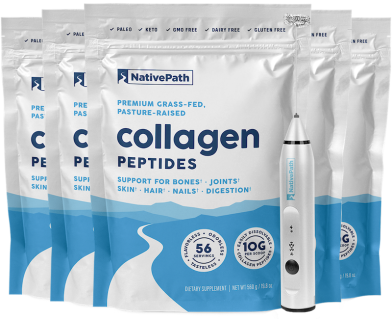
NativePath Collagen Peptides | Best overall | 10g per scoop |

|
BioTrust Ageless Multi-Collagen | Best multi-collagen blend | 11.25g per scoop |

|
Sculpt Nation Collagen | Best for all-in-one skin + joints + hair/nails support | 6.5g per serving at 25 calories |

|
Ancient Nutrition Multi Collagen Protein | Best for gut + whole-body support | 20g per 2 scoops |
|
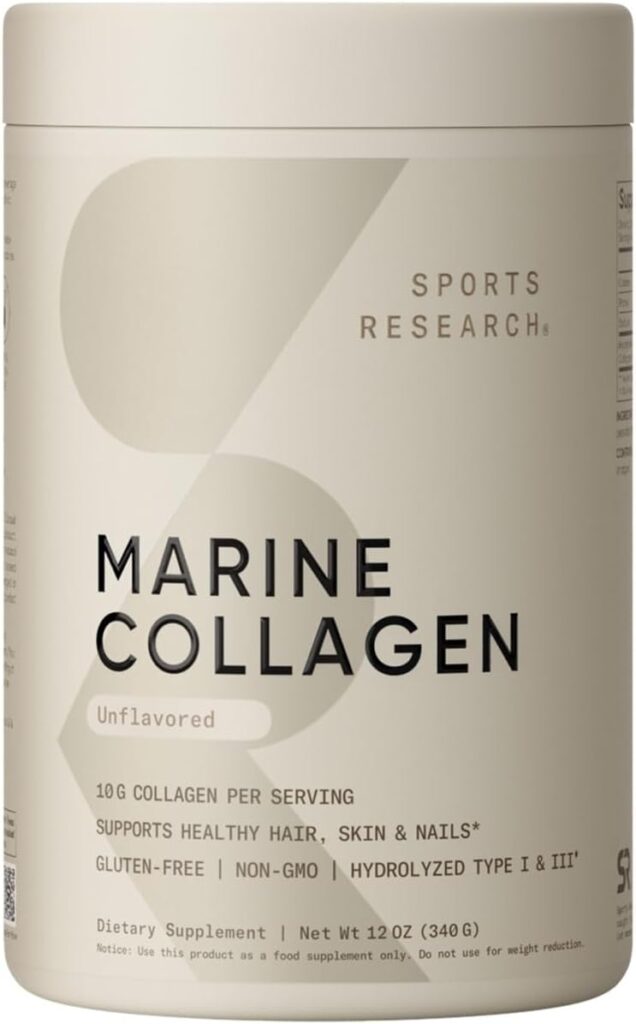
Sports Research Marine Collagen Peptides | Best for skin elasticity | 10g per scoop |
1. Best Overall: NativePath Collagen Peptides

NativePath Grass-Fed Collagen uses Type I & III collagen from pasture-raised, grass-fed bovine in South America. These collagen types are the most abundant in the body and are found in skin, hair, nails, bones, and connective tissue.
The formula uses an advanced hydrolysis process that breaks down collagen into shorter peptide chains for absorption. Each scoop provides 10 grams of collagen protein with 40 calories per serving.
How to Use: NativePath’s unflavored collagen powder dissolves completely in hot or cold liquids without clumping or altering taste. Mix it into:
- Coffee or tea
- Smoothies
- Soups or yogurt
- Baked goods
Women over 60 often choose this formula for its clean ingredient profile and higher protein content per serving.
The company recommends taking 2 scoops daily (20 grams total) for those addressing age-related collagen decline. This approach is referred to as “collagen loading” and is designed to help bring collagen levels back to baseline.
Highlights: Type I & III collagen | Grass-fed bovine from South America | 10g per scoop | 56 servings | Unflavored | Non-GMO | Gluten-free, sugar-free, dairy-free | 365-day guarantee
2. Best Multi-Collagen Blend: BioTrust Ageless Multi-Collagen

BioTrust Ageless Multi-Collagen contains all 5 types of the most-researched forms of collagen (Types I, II, III, V, and X) from four sources: bovine, marine, chicken, and eggshell membrane. Each scoop provides 11.25 grams of collagen.
Using multiple collagen types gives you a wider spread of amino acids that show up in different tissues throughout the body:
- Type I supports skin and hair
- Type II is primarily found in cartilage
- Type III supports tendons, ligaments, and muscles
- Type V works alongside Types I and III.
- Type X supports Type II in joint areas and is involved in bone formation.
This collagen powder is available in five options: unflavored, vanilla, chocolate, golden milk (with turmeric), and fruit punch.
How to Use: The unflavored version mixes into beverages without altering taste so you can easily add it into any of your favorite drinks. Each serving contains 40 calories with zero added sugar.
The formula is gluten-free, soy-free, dairy-free, hormone-free, and Non-GMO. It’s also Paleo and Keto-friendly.
Highlights: 5 collagen types (I, II, III, V, X) | 4 sources (bovine, marine, chicken, eggshell) | 11.25g per scoop | Multiple flavor options | Complete protein with tryptophan | 60-day guarantee
3. Best All-in-One: Sculpt Nation Collagen
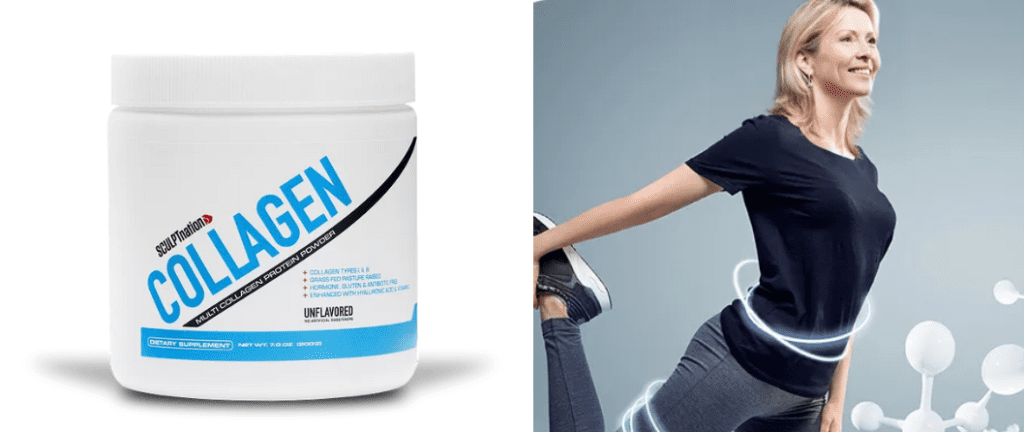
Sculpt Nation Collagen combines Types I, II, and III collagen from three sources: grass-fed bovine, free-range chicken, and wild-caught fish. This multi-source approach delivers amino acids for skin, joints, and connective tissue in one formula.
Sculpt Nation’s formula includes:
- Hyaluronic acid for skin hydration and joint lubrication
- Silica from horsetail and bamboo extracts to support collagen production
- 6.5 grams of collagen peptides per serving for skin, hair, nails, and joints
- Only 25 calories per serving (lower than most collagen powders)
How to Use: This unflavored powder mixes easily into hot or cold beverages like coffee and smoothies without altering taste.
Women who want a lower-calorie option that includes both collagen peptides and supporting ingredients in one scoop may prefer this formula.
The container provides 30 servings and is manufactured in a cGMP-compliant facility.
Highlights: Types I, II & III collagen | Grass-fed bovine, free-range chicken, wild-caught fish | 6.5g per serving at 25 calories | Includes hyaluronic acid and silica extracts (horsetail and bamboo) | Unflavored | 30 servings | cGMP facility
4. Best for Gut + Whole-Body Support: Ancient Nutrition Multi Collagen Protein
Ancient Nutrition Multi Collagen Protein combines 10 collagen types from four sources: grass-fed beef, chicken bone broth, fish, and eggshell membrane. This multi-source approach delivers amino acids for both skin elasticity and joint support.
It’s also enhanced with probiotics to help ease GI upset that some women experience with collagen peptides.
How to Use: The powder mixes cleanly in hot or cold liquids without clumping, making it easy to integrate into an existing morning and evening routine.
Multiple women dealing with different post-menopausal changes—including skin texture concerns, joint stiffness, digestive sensitivity, and overall connective tissue support—have found this formula helpful for its comprehensive approach.
Highlights: 10 collagen types | Grass-fed, cage-free, wild-caught | Probiotics included | Unflavored
5. Best for Skin Elasticity: Sports Research Marine Collagen Peptides
Sports Research Marine Collagen Peptides uses wild-caught fish sources to deliver Type I & III collagen, which contains amino acids concentrated in skin tissue. Marine collagen peptides have a smaller molecular weight compared to bovine, which affects how the body processes them.
The formula includes 18 amino acids including glycine, proline, and hydroxyproline, to work alongside collagen peptides in the body’s natural processes. The unflavored powder dissolves completely in coffee or smoothies without leaving residue.
Women targeting texture changes on the neck, arms, and chest often select marine collagen specifically. This formula is third-party tested, Non-GMO verified, Keto certified, and Paleo friendly.
Highlights: Wild-caught marine (Types I & III) | 10g collagen, 9g protein per scoop | Single ingredient | Unflavored | 34 servings
Choosing the Right Collagen Form and Type for Women Over 60
Hydrolyzed collagen peptides are collagen proteins broken into smaller pieces for digestion and absorption. This is the form used in the powders above, so your choice comes down to which formula fits you best.
- For a simple daily choice, NativePath is a good starting point. Its single-ingredient formula suits someone who wants collagen without added flavors or other supplements. Simply stir it into your morning coffee and drink.
- Choose BioTrust for five collagen types in one easy scoop. Its blend comes in unflavored and flavored options, so you can choose a taste you’ll enjoy taking each day.
- If you prefer fish-derived collagen, choose Sports Research Marine Collagen. It offers a single-ingredient alternative to bovine collagen. However, it contains fish and egg ingredients, so it isn’t suitable for anyone allergic to either.
- Mixing and Taste: Unflavored powders dissolve completely in hot or cold drinks without changing the taste. Flavored options exist, but be mindful that they may contain sweeteners.
- Stomach Sensitivity: If you’ve dealt with bloating or reflux from collagen before, you’re not alone. Some formulas include probiotics or use cleaner sourcing to reduce GI issues.
- Vitamin C Pairing: Vitamin C helps your body with collagen synthesis. Some collagen supplements include it already; others require you to take a separate vitamin C supplement or get it from your diet.
- If you already take several pills, powder keeps things easier. You can add it to a drink without adding more capsules to your day.
These products suit different needs, including comprehensive multi-type support, skin texture support, targeted joint support, and gentler options for sensitive stomachs.
How to Incorporate Collagen into Your Daily Routine
Collagen peptides are easy to add to a daily routine. Many women mix unflavored collagen powder into coffee, tea, or a smoothie. It usually dissolves well in hot or cold liquids without changing the taste.
If you use capsules or tablets, take the recommended serving with breakfast or another meal. Taking collagen consistently each day is generally more important than the exact time you take it.
Vitamin C helps support the body’s natural collagen production. If your collagen powder doesn’t contain vitamin C, you can get it from foods such as citrus fruit or consider a separate vitamin C supplement.
Keep collagen powder in a cool, dry place with the lid tightly closed. Humidity can cause the powder to clump, but clumping doesn’t necessarily mean the product has lost its potency.
Tips for Women Over 60 Using Collagen Supplements
- Pair with hydration: Drink plenty of water throughout the day to support skin hydration and joint lubrication naturally.
- Combine with a balanced diet: Collagen peptides work best alongside nutrient-dense foods rich in antioxidants, healthy fats, and protein.
- Add to warm beverages: Coffee, tea, or broth are simple ways to incorporate unflavored collagen powder without extra steps.
- Consider stacking supplements: Many women combine collagen with omega-3s, hyaluronic acid, or biotin for a comprehensive approach.
- Start with one formula: Test one product consistently before switching or adding multiple types to identify what works for your body.
- Track your experience: Note any changes in joint comfort, skin texture, or digestion over several weeks to assess tolerability.
Conclusion: Choosing the Best Collagen Supplement in Your 60s
Once you are past 60, your body makes far less collagen than it did in your thirties, and the decline speeds up after menopause. That is when many women start to notice thinner, drier skin, stiffer joints, and more sensitive digestion.
A well chosen collagen supplement with hydrolyzed collagen peptides can help top up what your body is no longer producing at the same pace. For women focused on both skin and bone health, FORTIBONE® and VERISOL® collagen supplements combine the studied peptides used for each goal in one formula.
NativePath Grass Fed Collagen is a simple, unflavored bovine collagen powder (Types I and III) that disappears into coffee or smoothies. BioTrust Ageless Multi Collagen combines five collagen types from four sources, which is helpful if you want broader support for skin, joints, and connective tissue in one scoop.
Whichever you choose, aim for around 10 grams of hydrolyzed collagen peptides per day, pair it with a source of vitamin C, and give it a steady 8 to 12 weeks before you judge the results.
FAQs: Collagen for Women Over 60
What Collagen Is Best for a 60-Year-Old Woman?
For women over 60, the best collagen depends on the main goal. Hydrolyzed collagen peptides are the most widely studied form because they dissolve easily and provide smaller peptides that are readily absorbed.
How Much Collagen Should a 60-Year-Old Woman Take a Day?
There’s no official daily collagen dose for women over 60. Most studies use 2.5 to 15 grams of collagen peptides per day, depending on the goal and type of collagen. A 10-gram daily serving is a common starting point for general skin, joint, and bone support, while branded peptides such as VERISOL® or FORTIBONE® have their own studied doses. Consistency is more important than taking collagen at a specific time of day.
Can Collagen Cause Heartburn?
Collagen supplements can cause digestive side effects in some people, including bloating, fullness, or heartburn, although they’re generally well tolerated. If collagen upsets your stomach, taking it with food or using a smaller serving may help. Products with added sweeteners or other ingredients can also affect digestion.
What are the First Signs that Collagen is Working?
The first noticeable changes depend on why you’re taking collagen. Skin hydration may improve within several weeks, while changes in skin elasticity or joint comfort can take longer. Clinical trials commonly assess results after 8 to 12 weeks of daily use, although results vary between individuals. Research on skin benefits is promising but not completely consistent across higher-quality studies.
What Happens to Your Body if you Take Collagen Every Day?
Daily collagen provides collagen peptides and amino acids such as glycine, proline, and hydroxyproline, which the body can use to build and maintain proteins in connective tissues. Studies have investigated regular collagen supplementation for skin hydration, elasticity, bone health, and joint function, although the results depend on the collagen peptide, dose, and length of use.
Does Collagen Help Burn Belly Fat?
Collagen doesn’t specifically target belly fat, and there’s no evidence that it can reduce fat from one area of the body. One small randomized trial in adults over 50 found that 15 grams of collagen peptides per day reduced overall body fat after 12 weeks, but this isn’t enough evidence to consider collagen a fat-loss supplement.
Disclaimer: This article is for informational purposes only and is not a substitute for professional medical advice, diagnosis, or treatment. Collagen supplements are not regulated by the FDA and are not intended to diagnose, treat, cure, or prevent any disease. Always consult your healthcare provider before starting any new supplement, especially if you have underlying health conditions or take medications.
