
Squalane vs. Hyaluronic Acid: Why You Need Both After 40 (And How to Use Them Right)
When I first started analyzing skincare ingredients, I thought hydration was simple. Put something wet on your face, and you’re moisturized. But squalane and hyaluronic acid both promise hydration while working in completely opposite ways.
One mimics your skin’s natural oils so perfectly it’s almost like tricking aging cells into behaving younger. The other holds up to 1,000 times its weight in water but might actually dehydrate you in the wrong environment.
The fascinating part? These ingredients don’t work in isolation. Their effectiveness depends on humidity levels, your skin’s pH, application timing, and even the season. This means the same ingredient can deliver dramatically different results from person to person, season to season, and morning to night.
Disclosure: As an Amazon Associate I earn from qualifying purchases at no extra cost to you.
Squalane vs Hyaluronic Acid: How Each Ingredient Works on Your Skin
Understanding why these ingredients work so differently starts with their molecular structure.
Squalane (C₃₀H₆₂) is a lightweight, biomimetic oil and the stable, hydrogenated cousin of squalene, a natural component of your sebum. With a molecular weight of about 422 Da, it falls under the “500-Dalton rule,” meaning it’s small enough to penetrate into the outer layers of the stratum corneum and integrate with your skin’s lipids, rather than just forming a film on top.
Hyaluronic acid works completely differently. It’s a glycosaminoglycan made of repeating sugar units that bind and hold water like a sponge. Different molecular weights behave differently on the skin:
- High to medium molecular weight HA (roughly 250 kDa–1,000+ kDa) mostly stays near the surface, forming a light film that boosts immediate plumping and surface hydration.
- Low molecular weight HA (tens to a few hundred kilodaltons) can diffuse more easily into the stratum corneum and upper epidermis, offering more sustained hydration and helping the skin feel smoother over time.
- Very small HA fragments (often called ultra-low molecular weight) are more biologically active and, in lab settings, can sometimes act as pro- or anti-inflammatory signals, depending on context. Their behaviour in real-world skincare is still being studied.
Why Hyaluronic Acid Can Cause Dry Skin in Low Humidity

Here’s something that blew my mind: hyaluronic acid can actually dehydrate your skin under certain conditions.
In very dry environments – think heated indoor air in winter, strong air-conditioning, or airplane cabins – there isn’t much ambient moisture for humectants like hyaluronic acid to grab. Instead, they can draw more water from deep within the skin up toward the surface.
If you don’t add extra moisture and seal it in, that water can simply evaporate, leaving skin feeling tighter or drier over time. This is one reason some people notice extra dryness from HA serums in winter unless they follow them with a richer moisturizer or oil.
Squalane doesn’t rely on environmental humidity. As an emollient with mild occlusive properties, it mainly works by reducing water loss from the skin’s surface, which is especially helpful in dry climates where your barrier is under more stress.
How to Layer Squalane and Hyaluronic Acid in Your Skincare Routine
The key to maximizing both ingredients lies in strategic sequencing:
- Step 1: Apply hyaluronic acid to slightly damp skin—not dripping wet, but with a light film of moisture still present. This gives the HA molecules something to grab onto immediately, preventing them from seeking water from deeper skin layers.
- Step 2: Wait 2-3 minutes for absorption. This timing allows the hyaluronic acid to finish its initial binding process while skin is still hydrated.
- Step 3: Apply squalane as a sealing layer. This locks in moisture while providing additional barrier protection.
This sequence matters because hyaluronic acid is water-based and works best when it can contact the skin directly, while squalane acts more like an emollient/occlusive “seal.”
If you apply squalane first, that oily layer can make it harder for HA serums to spread evenly and sink in, so most people get better results applying HA first, then squalane on top.
Concentration matters more than most realize:
- Hyaluronic acid: most leave-on products use roughly 0.1–2% HA, often in a mix of different molecular weights. Going very high doesn’t necessarily hydrate better and can feel sticky.
- Squalane: moisturizers may include anywhere from a few percent up to around 10% squalane, while pure squalane oils are 100%. Oily or combo skin often does best with just a few drops, while dry or mature skin may tolerate a more generous layer.
What I Actually Use:

After testing dozens of formulations, I keep coming back to The INKEY List Hyaluronic Acid Hydrating Face Serum (available on Amazon) because it uses multiple molecular weights that target both surface hydration and deeper skin layers without that sticky feeling cheaper serums leave behind.
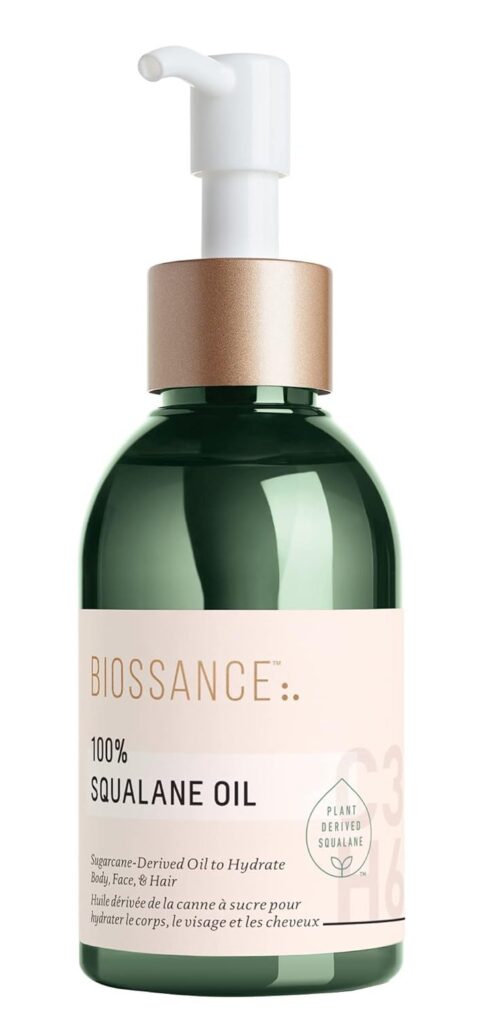
For squalane, Biossance 100% Squalane Oil (available on Amazon) is the only one I’ve found that absorbs quickly enough for mature skin without feeling heavy, and at its high concentration it hits that sweet spot for aging skin that needs serious barrier support.
These two together following the layering sequence above have completely changed how my skin holds moisture throughout the day.
Best Hydrating Ingredients for Aging Skin After 40
From your 30s onward, your skin gradually makes fewer of its own hydrating molecules. Studies show that hyaluronic acid levels in the skin drop noticeably with age, and by later adulthood they can be roughly half of what they are in younger adults. At the same time, sebum and key lipids like squalene decline, which weakens your barrier and makes moisture loss more likely.
That combination – less water-binding HA and fewer barrier lipids – is a big reason mature skin can feel tight, dull, and dehydrated even when you’re using moisturizer.
Many moisturizers for aging skin therefore combine:
- Squalane in roughly the 2–10% range, to replenish barrier lipids and reduce transepidermal water loss.
- Hyaluronic acid (usually 0.1–2%, often in multiple molecular weights) to pull water into the upper layers of skin and keep it there
- Morning and evening applications of both ingredients, with potential midday touch-ups in challenging environments
And yes, this can help oily skin too. Oily and breakout-prone skin is often dehydrated underneath; a damaged barrier and harsh cleansing can push sebaceous glands to keep pumping out oil.
Lightweight, non-comedogenic oils like squalane can support the barrier without feeling greasy, so some people find their skin feels less reactive and less “greasy but tight” over time – even if we don’t yet have strong clinical trials showing that squalane directly turns sebum production down.
Winter vs Summer Skincare: Adjusting Your Routine for Each Season
Your routine shouldn’t be static throughout the year. Environmental changes dramatically affect ingredient performance.
Winter Strategy:
- Increase squalane concentration and frequency—it’s your primary defense against seasonal sensitivity
- Apply HA primarily in evening when you can control humidity
- Layer additional occlusives (ceramides or light petroleum jelly) over the HA-squalane combo in extreme dryness
- Focus morning applications heavily on barrier protection
Summer Strategy:
- Higher humidity (60-80%) allows HA to perform at peak effectiveness
- Reduce squalane concentration to prevent pore congestion, but don’t eliminate it
- Focus squalane application on naturally drier areas (around eyes, neck, décolletage)
- Be mindful of air conditioning, which creates microclimates as challenging as winter heating
Spring/Fall Transitions:
- Adjust your skincare routine based on daily conditions rather than rigid protocols
- Pay attention to how skin feels each morning and adjust evening routine accordingly
- Keep both concentrations moderate and increase flexibility
What to Layer with Squalane and Hyaluronic Acid for Better Results
Both ingredients work beautifully with other actives when properly timed:
Synergistic pairs:
- Squalane + ceramides = comprehensive barrier repair (ceramides make up 50% of your skin barrier)
- Squalane + niacinamide = superior oil regulation
- HA + peptides = enhanced anti-aging effects with optimal hydration for peptide activity
Requires careful timing:
- Strong, low-pH acids can be more irritating alongside HA, and very acidic environments can shorten HA chains in lab settings. In practice, many people find it more comfortable to use stronger acids at night and rely on gentler humectants like HA in the morning.
- Retinoids may increase sensitivity with either ingredient—apply retinoids first, then squalane for barrier repair
- High-alcohol toners can temporarily disrupt your barrier and make skin feel drier, which can work against the barrier-supporting benefits of squalane. If you use them, let the toner fully evaporate, then follow with hydrating products and your squalane step.
Common Problems with Squalane and Hyaluronic Acid (And How to Fix Them)
- HA feels sticky or pills: You’re using too high a concentration or applying to completely dry skin. Mix with distilled water to dilute, or switch to a lower concentration formula.
- Squalane feels heavy: Reduce amount, apply to slightly damp skin, or mix a drop with your regular moisturizer rather than layering separately.
- Irritation from HA: Switch from ultra-low molecular weight to medium molecular weight formula. Look for sodium hyaluronate rather than hydrolyzed hyaluronic acid.
- Products won’t absorb: Check your cleansing routine—soap residue or hard water minerals create barriers. Consider a chelating cleanser if you live in a hard water area.
Why Squalane and Hyaluronic Acid Work Better Together After 40
Here’s what I’ve learned after years of testing these ingredients on mature skin: squalane and hyaluronic acid aren’t competing for the same job. They’re solving two completely different hydration problems that happen to show up at the same time as we age.
Hyaluronic acid pulls water into your skin, but it needs the right environment and proper layering to work without backfiring. Squalane builds and protects your moisture barrier no matter what the weather’s doing outside. For mature skin that’s producing less of both naturally, you need what each one does.
The difference between skin that temporarily looks plump versus skin that actually stays hydrated comes down to understanding how these two work together. Get the application sequence right, pay attention to your environment and skin type, and you’ll finally have hydration that holds up through your entire day.
After 40, when your skin is making a lot less of these compounds on its own, knowing how to use them properly isn’t just helpful. It’s essential.
FAQs: Squalane vs Hyaluronic Acid
What does squalane do to your skin?
Squalane replenishes skin’s natural lipids, strengthens the moisture barrier, and reduces transepidermal water loss. It feels lightweight, helps soften fine lines caused by dehydration, and can make skin feel smoother and more supple without a greasy finish.
What is squalane made out of?
Most modern squalane is a hydrogenated, stable form of squalene that’s typically sourced from plant oils such as sugarcane, olives, or rice bran. It’s designed to mimic the skin’s own sebum while being more stable and less prone to oxidation.
What are the downsides of squalane?
Squalane is generally well tolerated, but some people find it too rich and may experience congestion if they use too much or layer it over heavy products. It also doesn’t add water to the skin by itself, so it works best paired with humectants like glycerin or hyaluronic acid.
Can I use squalane and hyaluronic acid together?
Yes. Apply hyaluronic acid to slightly damp skin first, then seal it in with squalane. HA pulls in water, while squalane locks that hydration in and supports the barrier, making them a complementary pair in most routines.
What does hyaluronic acid do to your skin?
Hyaluronic acid is a humectant that attracts and holds water in the upper layers of the skin. It can temporarily plump fine lines, improve the look of dryness, and help other moisturizers work better when layered correctly.
Which is better, niacinamide or hyaluronic acid?
Niacinamide and hyaluronic acid do different jobs. Hyaluronic acid focuses on hydration, while niacinamide can help with redness, pore appearance, oil regulation, and overall tone. Most people don’t have to choose—using both in the same routine is common.
Is there a downside to hyaluronic acid?
Potential downsides include stickiness, pilling, or increased dryness if it’s used in very low humidity without enough moisture or an occlusive on top. Some people also find certain low–molecular weight formulas irritating.
Why do some dermatologists not like hyaluronic acid?
A few dermatologists are cautious because overuse, high concentrations, or the wrong formula in a dry environment can make skin feel tighter and more dehydrated. Others feel it’s overhyped compared to simpler, well-formulated moisturizers.
Who should avoid hyaluronic acid?
People who consistently experience redness, burning, or breakouts when using HA—even after switching to gentle, fragrance-free formulas—may do better avoiding it. Anyone with a history of reacting to specific HA serums should patch test or consult a dermatologist first.
What is better for wrinkles, vitamin C or hyaluronic acid?
Vitamin C targets wrinkles by supporting collagen and protecting against free-radical damage, while hyaluronic acid mainly plumps and hydrates the surface. For long-term wrinkle care, vitamin C has stronger evidence, but pairing it with HA gives both structural and hydration benefits.
Disclaimer: This article is for general informational purposes only and is not intended to diagnose, treat, cure, or prevent any disease. It should not be used as a substitute for advice from a dermatologist or other qualified healthcare professional. Always consult a professional before starting or changing any skincare routine, especially if you have existing skin conditions, allergies, or are using prescription treatments.
