Collagen vs Retinol for Wrinkles: Which Works Best for Mature Skin?
If you’ve been researching ingredients for fine lines and overall skin support, you’ve probably come across collagen and retinol. These two powerhouse ingredients dominate the anti-aging skincare conversation, but understanding which one—or both—deserves a place in your routine can be confusing.
This comprehensive guide breaks down the science behind collagen and retinol, their benefits for mature skin, and how to use them effectively for the best results.
Understanding Collagen: How This Protein Affects Aging Skin
Collagen is the most abundant protein in your body, providing essential structure and support to your skin. Think of it as the framework that helps keep your skin firm, smooth, and resilient.
Natural Collagen Loss and Aging Skin
Starting in the mid-20s, the body’s natural collagen production decreases by approximately 1% each year. By age 50, a significant amount of collagen is lost, which can contribute to:
- Fine lines and wrinkles
- Loss of skin firmness
- Reduced elasticity
- Thinner, more delicate skin
This natural decline is one of the primary reasons we see visible signs of aging. Understanding this process helps explain why collagen supplementation has become such a focus in anti-aging skincare.
Topical Collagen: Useful, But Limited
Most collagen in creams and serums is made of large molecules that generally don’t penetrate the skin barrier well, so it’s unlikely to “deliver collagen” into deeper layers where skin structure is formed.
While these products can provide surface hydration and may feel luxurious, current research suggests they cannot deliver collagen directly into the deeper layers of your skin where structural support is needed.
This doesn’t mean topical collagen products are useless—they do have surface level benefits—but managing expectations about their deeper effects is important for informed skincare decisions.
Note: Smaller, hydrolyzed collagen fragments may penetrate more than intact collagen, but results are formulation-dependent.
Oral Collagen Supplements: What Research Suggests
Oral collagen supplements contain collagen peptides, which are smaller, more easily absorbed molecules that your body may be able to utilize more effectively than topical applications.
Research shows encouraging results: A 2013 study published in Skin Pharmacology and Physiology found that women who took collagen peptides for eight weeks experienced statistically significant improvements in skin elasticity compared to placebo. Multiple subsequent studies have reported similar findings, though researchers note that more comprehensive, long-term research would strengthen these conclusions.
The theory behind oral supplementation is that these smaller peptides can be absorbed into the bloodstream and potentially support your body’s natural collagen production processes in the skin.
Retinol Benefits for Aging Skin: What Science Shows
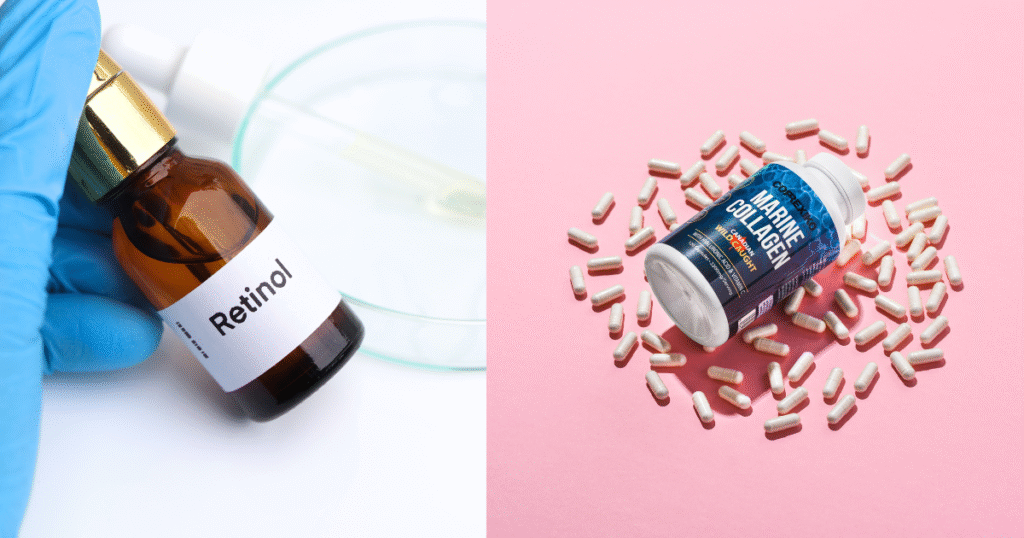
Retinol is a derivative of vitamin A and has been extensively studied and recommended by dermatologists for decades. Unlike collagen, retinol can penetrate the skin effectively and appears to create measurable changes.
How Retinol Works to Reduce Wrinkles
When you apply retinol to your skin, it converts to retinoic acid, which research suggests can:
- Stimulate collagen production in your skin’s deeper layers
- Accelerate cell turnover, revealing fresher skin
- Reduce the appearance of wrinkles and fine lines
- Improve skin texture and tone
- Help even out age spots and hyperpigmentation
- Address acne if that’s a concern
Scientific Evidence Supporting Retinol Use
A landmark 2007 study in the Archives of Dermatology demonstrated that retinol treatment significantly increased procollagen production in naturally aged skin. After 24 weeks of treatment, subjects showed measurable improvements in fine wrinkles and increased collagen-related proteins compared to vehicle treatment.
Retinol appears to work through two mechanisms:
- It may help prevent the breakdown of existing collagen
- It may stimulate the production of new collagen fibers
This dual action contributes to retinol’s reputation as an effective ingredient for mature skin concerns.
Side Effects and Safety Considerations for Retinol
While retinol shows promise in research, it requires a thoughtful approach, especially for mature or sensitive skin.
Common Initial Reactions
When you first start using retinol, you may experience what dermatologists call “retinization”:
- Redness and irritation
- Dryness and flaking
- Increased sensitivity
- Mild peeling
These effects are typically temporary and often diminish within 2-4 weeks as your skin adjusts to the ingredient. However, not everyone experiences these side effects, and starting slowly can minimize discomfort.
Safe Retinol Application for Mature Skin
- Begin with a low concentration (0.01-0.03%)
- Use it only 1-2 times per week initially
- Apply it at night (retinol degrades in sunlight)
- Gradually increase frequency over 4-8 weeks as tolerated
- Always use sunscreen during the day (SPF 30 or higher minimum)
Critical sun protection note: Retinol may increase your skin’s sensitivity to sun damage. Daily broad-spectrum sun protection is essential when using any retinol product, regardless of weather or season.
Gentler Retinol Alternatives
If you have particularly sensitive skin, consider starting with:
- Retinyl palmitate (a milder form of vitamin A)
- Retinol products combined with moisturizers or ceramides to buffer irritation
- Encapsulated retinol (time-release formulations)
- Prescription retinoids under dermatologist supervision for personalized strength
Collagen vs Retinol: Side-by-Side Comparison
| Feature | Oral Collagen Supplements | Topical Retinol |
|---|---|---|
| Primary Benefit | May support skin hydration and elasticity from within | May stimulate collagen production and accelerate cell renewal |
| Research Support | Growing evidence from clinical trials; more research ongoing | Extensive research over decades; well-documented effects |
| How It Works | Peptides absorbed through digestion may support body’s collagen production | Penetrates skin to stimulate collagen synthesis and cell turnover |
| Time to Results | 4-8 weeks for hydration; 8-12 weeks for elasticity improvements | 4-6 weeks for texture; 3-6 months for wrinkle reduction |
| Side Effects | Generally minimal; occasional digestive discomfort | May cause irritation, dryness, peeling initially |
| Best For | Overall skin health support; those sensitive to topicals | Targeted wrinkle reduction; multiple skin concerns |
| Sun Sensitivity | No increased sun sensitivity | Increases sun sensitivity—daily SPF essential |
| Application | Take daily with water, preferably same time each day | Apply at night to clean, dry skin |
| Top Recommended Product* | Vital Proteins Collagen Peptides (Types I & III, unflavored, easily absorbed) | CeraVe Resurfacing Retinol Serum (encapsulated retinol with ceramides for sensitive skin) |
*Product recommendations based on ingredient quality, formulation, and suitability for mature skin. Always consult with a dermatologist for personalized recommendations.
Combining Collagen and Retinol: A Comprehensive Approach
Many skincare experts suggest that using both ingredients together may provide complementary benefits, addressing skin aging through multiple pathways.
Suggested Combined Routine
- Morning: Take oral collagen supplement with water, followed by moisturizer and broad-spectrum SPF 30+
- Evening: Apply retinol serum to clean, dry skin, followed by moisturizer
This approach combines retinol’s direct effects on the skin with collagen supplementation’s potential systemic support. However, individual results vary, and this combination may not be necessary or beneficial for everyone.
Choosing Quality Collagen Supplements
When selecting oral collagen supplements, research suggests looking for:
- Types I and III collagen (most beneficial for skin)
- Hydrolyzed collagen peptides (better absorption)
- Dosage of 2.5-10 grams daily (amounts used in studies)
- Third-party testing for quality assurance
- Marine or bovine sources (well-researched forms)
Lifestyle Factors That Support Healthy Aging Skin
While collagen and retinol may be valuable tools, they work best as part of a holistic approach to skin health. Research consistently shows that lifestyle factors significantly impact skin aging.
Dietary Support for Skin Health
Your diet plays a crucial role in supporting healthy skin as you age:
- Vitamin C-rich foods help support collagen production naturally. Include citrus fruits, strawberries, bell peppers, broccoli, and Brussels sprouts in your diet. Vitamin C is essential for the enzymatic reactions that create collagen in your body.
- Protein sources provide the amino acids your body needs for collagen synthesis. Fish (especially those high in omega-3s like salmon and mackerel), lean poultry, eggs, and legumes all contribute important building blocks.
- Antioxidant-rich foods help protect against oxidative stress that accelerates skin aging. Berries, leafy greens, nuts, and green tea contain compounds that may help protect your skin from environmental damage.
- Healthy fats support skin barrier function and overall skin health. Avocados, olive oil, nuts, and fatty fish provide essential fatty acids that contribute to skin moisture and flexibility.
Critical Sun Protection Practices
Sun damage is the single most significant contributor to premature skin aging. Protecting your skin from UV radiation is more important than any topical product:
- Use broad-spectrum SPF 30 or higher every day, even on cloudy days and in winter
- Reapply sunscreen every 2 hours when outdoors
- Wear protective clothing, including wide-brimmed hats
- Seek shade during peak sun hours (10 AM – 4 PM)
- Remember that UV rays penetrate windows, so protection is needed indoors near windows
Sleep and Stress Management
Quality sleep allows your skin to repair and regenerate. During deep sleep, growth hormone levels increase, supporting tissue repair. Aim for 7-9 hours of quality sleep nightly.
Chronic stress elevates cortisol levels, which research suggests may accelerate skin aging by breaking down collagen. Stress management techniques—whether meditation, regular exercise, or engaging hobbies—may benefit both your overall health and your skin.
Hydration and Its Role in Skin Health
Adequate hydration supports all cellular functions, including those in your skin. While drinking water alone won’t erase wrinkles, proper hydration helps maintain skin’s moisture balance and supports the effectiveness of topical treatments. Aim for about 8 glasses of water daily, adjusting for activity level and climate.
Professional Treatments That Complement At-Home Care
While at-home products form the foundation of skincare, professional treatments can provide additional benefits when used strategically.
Dermatologist-Supervised Treatments
- Prescription-strength retinoids (tretinoin, adapalene) are more potent than over-the-counter retinol and can produce faster, more dramatic results under professional supervision. A dermatologist can determine the appropriate strength and monitor your skin’s response.
- Chemical peels use controlled acids to remove damaged outer skin layers, revealing smoother skin and improving product penetration. Different peel strengths address various concerns, from superficial texture issues to deeper wrinkles.
- Laser treatments can stimulate collagen production deep within the skin through controlled thermal injury. Various laser types address different concerns—fractional lasers for texture and wrinkles, intense pulsed light (IPL) for pigmentation.
- Microneedling creates controlled micro-injuries that trigger your skin’s natural healing response and collagen production. When combined with topical treatments, this procedure may enhance product absorption.
When to Consult a Dermatologist
Consider professional consultation if you:
- Have sensitive skin or existing skin conditions (rosacea, eczema)
- Want faster or more dramatic results than OTC products provide
- Experience persistent irritation from retinol products
- Have concerns about age spots, severe wrinkles, or skin texture
- Need guidance on combining multiple treatments safely
Setting Realistic Expectations for Anti-Aging Skincare
Understanding what topical products and supplements can—and cannot—do helps you make informed decisions and maintain realistic expectations.
What Collagen and Retinol Can Realistically Achieve
Retinol, based on current research, appears capable of:
- Gradually improving skin texture and tone over months of consistent use
- Reducing the appearance of fine lines with regular application
- Supporting your skin’s natural collagen production processes
- Improving cell turnover for fresher-looking skin
- Helping to even out pigmentation irregularities
Oral collagen supplements show potential for:
- Supporting skin hydration and moisture retention
- Possibly improving skin elasticity measurements
- Contributing to overall skin health when combined with proper nutrition
- Providing amino acids that support your body’s collagen production
What They Cannot Do
Neither ingredient can:
- Completely eliminate deep wrinkles or dramatically transform severely aged skin
- Replace the need for sun protection and healthy lifestyle habits
- Work the same way for every person—individual results vary significantly
- Reverse years of sun damage overnight or in weeks
- Substitute for medical treatments when needed for serious skin conditions
The Importance of Consistency and Patience
The most critical factor in seeing results from either collagen supplements or retinol is consistent, long-term use. Improvements accumulate gradually over weeks and months, not days. Many people discontinue products before giving them adequate time to work.
Research studies demonstrating benefits typically run for 8-12 weeks minimum, with more significant improvements appearing at 12-24 weeks. If you start a new product, commit to at least 8-12 weeks of consistent use before evaluating its effectiveness.
Embracing Healthy, Vibrant Skin at Every Age
Wrinkles and fine lines are natural parts of a life well-lived. The goal of effective skincare isn’t to erase every sign of your years, but rather to maintain healthy, comfortable, resilient skin at every age.
Skin aging is a complex process influenced by genetics, environment, lifestyle, and time. While products like retinol and collagen supplements may support skin health, they represent just one part of a comprehensive approach that includes sun protection, nutrition, stress management, and self-acceptance.
By understanding how collagen and retinol work—and using them thoughtfully alongside healthy lifestyle practices—you can support your skin’s health and appearance for years to come.
Frequently Asked Questions About Collagen and Retinol
What’s the main difference between collagen and retinol?
Collagen is a structural protein that provides support to your skin, while retinol is a vitamin A derivative that research suggests stimulates your skin to produce more collagen and accelerates cell turnover. Retinol appears to create active changes in your skin, while collagen supplements may provide building blocks for those changes.
Can I use collagen and retinol together safely?
Yes, many dermatologists recommend using retinol topically at night and taking collagen supplements during the day. These approaches work through different mechanisms and don’t interfere with each other. However, as with any new skincare regimen, it’s wise to introduce one product at a time to monitor how your skin responds.
How long before I see results from retinol?
Most people notice improvements in skin texture within 4-6 weeks of consistent use in clinical studies. Visible reduction in fine lines typically takes 3-6 months of regular application. Results depend on the retinol concentration, frequency of use, and individual skin characteristics.
What are the side effects of retinol?
Common initial side effects include redness, dryness, and peeling. These usually subside within 2-4 weeks as your skin adjusts. Starting with a low concentration and gradually increasing frequency minimizes these effects. Some people experience minimal irritation, while others are more sensitive.
How should I start using retinol on mature skin?
Begin with a low concentration (0.01-0.03%), apply it only at night, and use it just 1-2 times per week initially. After 2-4 weeks without significant irritation, gradually increase to 3 times weekly, then eventually nightly if tolerated. Always use SPF 30+ during the day, as retinol may increase sun sensitivity.
Do collagen supplements actually work for skin?
Research shows encouraging results. Multiple studies report improvements in skin elasticity and hydration with oral collagen supplementation, though individual results vary. A 2013 study found statistically significant improvements in skin elasticity after 8 weeks. However, researchers note that more long-term, large-scale studies would strengthen these findings. Choose hydrolyzed collagen peptides (Types I and III) for potentially better absorption.
What foods help boost natural collagen production?
Foods rich in vitamin C (citrus fruits, bell peppers, strawberries) support collagen synthesis, as vitamin C is essential for the enzymatic process. Protein sources (fish, eggs, bone broth) provide necessary amino acids. Antioxidant-rich foods (berries, leafy greens) may help protect existing collagen from damage. However, dietary support works best combined with sun protection and healthy lifestyle habits.
Is retinol safe for all skin types?
Retinol may benefit most skin types, but individuals with very sensitive skin, rosacea, eczema, or certain conditions should consult a dermatologist before use. They may recommend gentler alternatives like retinyl palmitate, encapsulated retinol formulations, or prescription options that can be carefully monitored.
At what age should I start using retinol?
While many dermatologists suggest starting retinol in the late 20s as prevention, it’s never too late to begin. If you’re starting in your 50s, 60s, or beyond, research suggests you may still see meaningful improvements with consistent use. Mature skin may require more gradual introduction and careful moisturization to minimize irritation.
How does sun exposure affect collagen and retinol effectiveness?
UV radiation breaks down collagen in your skin through a process called collagenase activation, accelerating aging. When using retinol, sun protection becomes even more critical because retinol may increase sun sensitivity. Use broad-spectrum SPF 30+ daily, regardless of weather, season, or whether you’re indoors (UV rays penetrate windows). Sun protection is the single most important anti-aging measure you can take.
Should I see a dermatologist before starting retinol?
While many over-the-counter retinol products are safe to try independently, consulting a dermatologist is beneficial if you have sensitive skin, existing skin conditions, take certain medications, or want faster results with prescription-strength options. A dermatologist can provide personalized guidance based on your specific skin type, concerns, and health history.
Can topical collagen creams improve wrinkles?
Current research suggests that topical collagen has limited effectiveness for reducing wrinkles because collagen molecules are too large to penetrate beyond the skin’s surface. These products may provide surface hydration and temporary moisturizing benefits, but they likely cannot deliver structural collagen to deeper skin layers where it’s needed for wrinkle reduction. Oral supplementation or collagen-stimulating ingredients like retinol appear to be more promising approaches.
Key Takeaways
- Topical collagen appears to have limited effectiveness due to large molecule size that cannot penetrate skin’s deeper layers
- Oral collagen supplements show encouraging results in research studies for improving skin elasticity and hydration, though more long-term research continues
- Retinol has substantial scientific evidence suggesting it can reduce wrinkles and stimulate collagen production when used consistently
- Combining both approaches may provide complementary benefits by addressing skin aging through multiple pathways
- Start retinol slowly and carefully with low concentrations, gradual frequency increases, and diligent sun protection
- Consistency matters more than perfection—results from both ingredients take weeks to months of regular use
- Support your skincare routine with sun protection, healthy diet, adequate sleep, stress management, and proper hydration
- Consult a dermatologist for personalized guidance, especially if you have sensitive skin or want prescription-strength options
- Manage expectations realistically—no product can completely reverse aging, but proper skincare can support healthy, vibrant skin at any age
Medical Disclaimer: This article is for informational purposes only and does not constitute medical advice. Always consult with a qualified healthcare provider or dermatologist before starting any new skincare regimen, especially if you have existing skin conditions, take medications, or are pregnant or nursing.
References:
- Proksch E, Segger D, Degwert J, et al. Oral Supplementation of Specific Collagen Peptides Has Beneficial Effects on Human Skin Physiology. Skin Pharmacol Physiol. 2014;27(1):47-55.
- Kafi R, Kwak HS, Schumacher WE, et al. Improvement of Naturally Aged Skin With Vitamin A (Retinol). Arch Dermatol. 2007;143(5):606-612.
