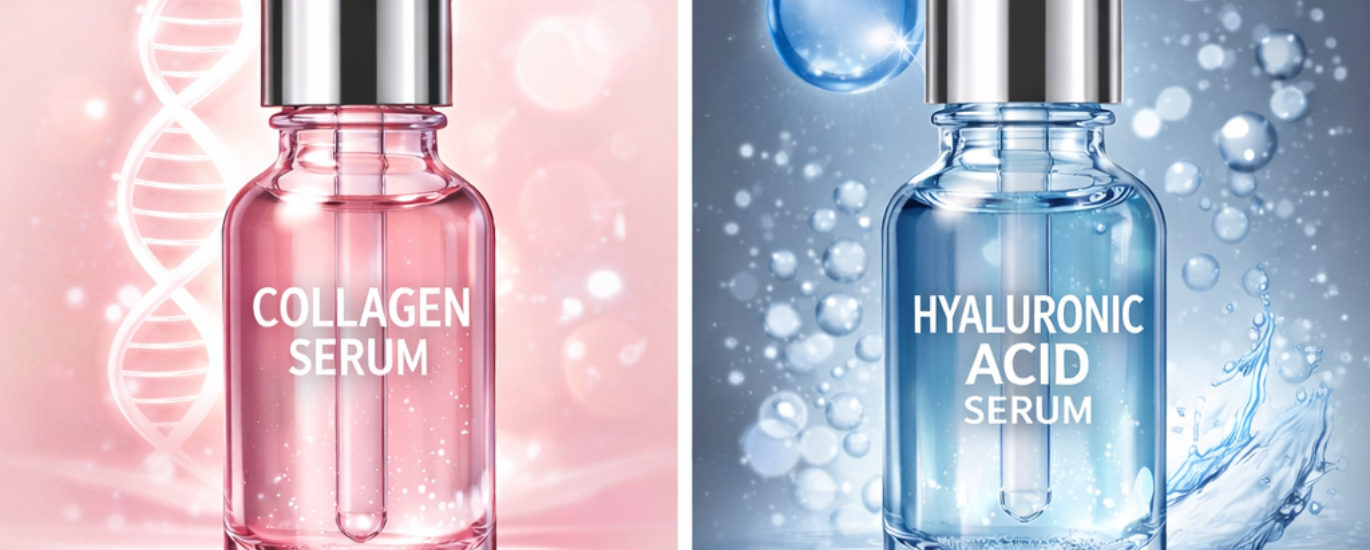
Collagen Serum vs Hyaluronic Acid: Which Best Suits Your Skin?
Collagen serum and hyaluronic acid show up in nearly every anti-aging routine for good reason. Both ingredients address common concerns like fine lines, dehydration, and loss of firmness that become more visible as skin ages.
But what’s the real story behind these popular ingredients?
Are they truly effective, or just another passing trend?
In this article we take a look at the science behind collagen and hyaluronic acid, explore their benefits, and uncover how to incorporate them into your skincare routine for maximum results.
Understanding Collagen and Hyaluronic Acid
Collagen: The Skin’s Structural Protein
Collagen is the most abundant protein in our bodies, making up about 30% of our total protein content. It’s essentially the scaffolding that keeps our skin firm, plump, and youthful.
As we age, our natural collagen production starts to slow down, leading to wrinkles, fine lines, and sagging skin.
Collagen molecules are quite large, which can make it challenging for topical applications to penetrate deeply into the skin. However, many collagen serums contain hydrolyzed collagen or collagen peptides, smaller molecules that may be more easily absorbed.
Hyaluronic Acid: Nature’s Moisture Magnet
Hyaluronic acid is a naturally occurring substance in our bodies that can hold up to 1000 times its weight in water. It’s found in high concentrations in our skin, eyes, and connective tissues.
In skincare, hyaluronic acid acts as a powerful humectant, drawing moisture into the skin and helping to keep it hydrated, supple, and glowing.
Hyaluronic acid comes in various molecular weights. Lower molecular weight hyaluronic acid can penetrate deeper into the skin, while higher molecular weight versions provide surface hydration and create a protective barrier.
What Are The Benefits of Collagen Serum?
Collagen serums are designed to boost our skin’s natural collagen production. Here are some of the key benefits:
- Improved Skin Elasticity: By supporting collagen synthesis, these serums can help improve skin firmness and elasticity over time.
- Reduced Appearance of Fine Lines: Collagen can help plump up the skin, minimizing the appearance of fine lines and wrinkles.
- Enhanced Skin Texture: Regular use of collagen serums may lead to smoother, more refined skin texture.
- Increased Hydration: Many collagen serums also contain hydrating ingredients that can help improve skin moisture levels.
- Potential Wound Healing Properties: Some studies suggest that collagen may support faster wound healing and skin repair.
Keep in mind that while collagen serums can be useful, their effectiveness can vary. The molecular size of collagen often prevents deep penetration into the skin. However, many formulations include other active ingredients like vitamin C or retinol, which can enhance their overall effectiveness.
What Are The Benefits of Hyaluronic Acid?
Hyaluronic acid has become a staple in many skincare routines, and for good reason. Here’s why it’s so popular:
- Intense Hydration: Hyaluronic acid is unparalleled in its ability to attract and retain moisture in the skin.
- Plumping Effect: By drawing water into the skin, hyaluronic acid can create an immediate plumping effect, reducing the appearance of fine lines and wrinkles.
- Suitable for All Skin Types: Hyaluronic acid is non-irritating and suitable for all skin types, including sensitive and acne-prone skin.
- Enhances Skin Barrier Function: By improving skin hydration, hyaluronic acid can help strengthen the skin’s protective barrier.
- Versatility: Hyaluronic acid works well with other skincare ingredients and can be found in various products, from serums to moisturizers.
- Potential Anti-Inflammatory Properties: Some research suggests that hyaluronic acid may have anti-inflammatory effects on the skin.
The immediate results of hyaluronic acid are one of its biggest selling points. Users often report plumper, more hydrated skin after just one use.
Collagen Serum vs Hyaluronic Acid: Which Should You Choose?
Both collagen and hyaluronic acid have their place in an effective skincare routine. The choice between the two often depends on your specific skin concerns and goals.
Collagen serums are particularly useful for those looking to improve skin elasticity and firmness over time. They’re especially useful for mature skin or those starting to see the first signs of aging.
If you’re concerned about loss of skin firmness or deep wrinkles, a collagen serum might be a good choice.
Hyaluronic acid, on the other hand, is a universal crowd-pleaser. It’s suitable for all skin types and can provide immediate hydration and plumping effects.
It’s especially useful for people with dry or dehydrated skin, or anyone looking for a quick boost of radiance.
If your main concern is hydration or you want to see immediate results, hyaluronic acid might be your best bet.
However, these ingredients aren’t mutually exclusive. In fact, they can work synergistically and using both in your skincare routine could provide comprehensive anti-aging benefits.

How to Incorporate Collagen and Hyaluronic Acid into Your Skincare Routine
Ready to give these powerhouse ingredients a try? Here’s a step-by-step guide to incorporating them into your skincare routine:
- Cleanse: Start with a thorough cleanse to remove any dirt, oil, or makeup from your skin.
- Apply Active Ingredients: If you’re using any active ingredients like retinol or vitamin C, apply these first. These ingredients often need to be closest to the skin to be most effective.
- Hyaluronic Acid: Apply your hyaluronic acid serum to damp skin. This helps it draw moisture into your skin more effectively. Gently pat it into your skin as opposed to rubbing.
- Collagen Serum: Follow up with your collagen serum. Apply a small amount and gently massage it into your skin.
- Moisturizer: Seal everything in with a moisturizer. This helps lock in the benefits of your serums and provides extra hydration.
- Sunscreen: During the day, always finish with a broad-spectrum sunscreen. This protects your skin from UV damage, which can break down collagen and lead to premature aging.
Consistency is key when it comes to skincare. Use these products regularly as part of your daily routine to see the best results.
Collagen and Hyaluronic Acid: Safety Tips and What to Watch For
While collagen and hyaluronic acid are generally safe for most skin types, there are a few things to watch out for:
- Overdoing It: More isn’t always better when it comes to skincare. Using too much product can lead to clogged pores or skin irritation. Stick to the recommended amount.
- Impatience: While hyaluronic acid can provide immediate hydration, the effects of collagen serums may take several weeks to become noticeable. Be patient and consistent with your routine.
- Allergies: Be aware of potential allergies, especially with collagen products derived from marine sources if you have seafood allergies. Always patch test new products before applying them to your face.
- Unrealistic Expectations: Remember that topical collagen might not penetrate deeply into the skin. Look for products with other active ingredients that can boost collagen production, such as vitamin C or peptides.
- Neglecting Other Skincare Steps: While collagen and hyaluronic acid are useful, they shouldn’t replace other important steps in your skincare routine, like cleansing and sun protection.
Adapting Collagen and Hyaluronic Acid for Winter, Summer, Stress, and Hormones
Your skincare needs may change based on various factors like climate, stress levels, or hormonal changes. Here’s how to adapt:
- Dry Climates or Winter Months: In dry conditions, amp up your hyaluronic acid usage for extra hydration. You might want to apply it more often or layer it under a richer moisturizer.
- High-Stress Periods: During times of high stress, focus on collagen-boosting products to combat the effects of stress on your skin. Stress can speed up collagen breakdown, so giving your skin extra support during these times can be useful.
- Hormonal Changes: If you’re dealing with hormonal changes, like during pregnancy or menopause, you might need to adjust your routine. Hormonal fluctuations can affect skin hydration and elasticity. Consult with a dermatologist to tailor your routine accordingly.
- Summer Months: In warmer, more humid weather, you might find that you need less hyaluronic acid. However, don’t skip it entirely, instead, opt for a lighter formulation.
- After Sun Exposure: If you’ve spent time in the sun, focus on hydration and repair. Use hyaluronic acid to replenish moisture and consider a collagen serum to support skin recovery.
Skincare isn’t one-size-fits-all. Pay attention to how your skin responds and be willing to adjust your routine as needed.
Collagen Types, Hyaluronic Acid Sizes, and What to Look for
As you become more familiar with these ingredients, you might want to explore some more advanced concepts:
Types of Collagen
There are at least 16 types of collagen in the human body, but types I, II, and III are the most common in skincare:
- Type I: This is the most abundant type of collagen in the skin. It’s crucial for skin strength and elasticity.
- Type II: While less common in skincare, this type is important for joint health.
- Type III: Often found alongside Type I, this type is important for skin elasticity and is more prevalent in young skin.
When choosing a collagen product, look for those that specify which type(s) of collagen they contain.
Hyaluronic Acid Molecular Weights
Hyaluronic acid comes in different molecular weights, which affect how deeply it can penetrate the skin:
- High Molecular Weight: These larger molecules stay on the surface of the skin, providing immediate hydration and a plumping effect.
- Low Molecular Weight: These smaller molecules can penetrate deeper into the skin, potentially providing longer-lasting hydration.
- Multi-Weight Formulations: Some products mix different weights for comprehensive hydration at all levels of the skin.
Synergistic Ingredients
Both collagen and hyaluronic acid work well with other skincare ingredients. Here are some powerful combinations:
- Vitamin C + Collagen: Vitamin C is crucial for collagen synthesis. Using these together can boost the collagen-promoting effects.
- Ceramides + Hyaluronic Acid: Ceramides help lock in the moisture that hyaluronic acid draws into the skin.
- Peptides + Collagen: Peptides can signal the skin to produce more collagen, enhancing the effects of collagen serums.
The Role of Diet
While topical applications are important, don’t underestimate the power of nutrition in supporting skin health:
- Collagen-Boosting Foods: Foods rich in vitamin C, zinc, and copper can support your body’s natural collagen production. Think citrus fruits, leafy greens, and nuts.
- Hyaluronic Acid-Rich Foods: Some foods naturally contain hyaluronic acid or support its production, including bone broth, soy-based foods, and citrus fruits.
How to Test Collagen and Hyaluronic Acid in Your Routine (3-Week Experiment)
To really understand how these ingredients work for your skin, try this exercise:
- Week 1: Use only hyaluronic acid in your routine. Apply it to damp skin twice daily, followed by your regular moisturizer.
- Week 2: Switch to collagen serum only. Apply it once a day, preferably at night.
- Week 3: Combine both ingredients. Apply hyaluronic acid to damp skin, followed by collagen serum.
Throughout this experiment, keep a skin diary noting any changes in hydration, firmness, and overall appearance. Pay attention to how your skin feels immediately after application and throughout the day.
This personalized approach will give you valuable insights into how these ingredients affect your unique skin. what works for someone else might not work the same way for you.
Long-Term Skincare Strategy
Incorporating collagen and hyaluronic acid into your routine is just the beginning of a comprehensive skincare strategy. Here are some tips for long-term success:
- Consistency is Key: Skincare results take time. Stick with your routine for at least 6-8 weeks before evaluating its effectiveness.
- Adapt as You Age: Your skin’s needs change over time. Be prepared to adjust your routine as you enter different stages of life.
- Don’t Neglect the Basics: While focusing on anti-aging ingredients is great, don’t forget the fundamentals of good skincare: cleansing, moisturizing, and sun protection.
- Consider Professional Treatments: In-office treatments like microneedling or chemical peels can complement your at-home routine and enhance the effects of your skincare products.
- Holistic Approach: Remember that skin health is influenced by more than just what you put on it. Factors like diet, sleep, stress management, and hydration all play a role in how your skin looks and feels.
Frequently Asked Questions
What is collagen serum used for?
Collagen serum is primarily used to improve skin elasticity, reduce the appearance of fine lines and wrinkles, and promote overall skin firmness. It’s designed to support the skin’s natural collagen production, which tends to decrease as we age.
Can hyaluronic acid be used daily?
Yes, hyaluronic acid can be used daily. In fact, it’s often recommended for daily use because of its gentle, hydrating properties.
It’s suitable for most skin types and can be used both morning and night.
Does collagen serum really work?
The effectiveness of collagen serum can vary. While some studies show promising results, the large size of collagen molecules can make it difficult for them to penetrate deeply into the skin. However, many collagen serums contain other useful ingredients that can improve skin appearance.
Is hyaluronic acid good for oily skin?
Yes, hyaluronic acid can be useful for oily skin. It provides hydration without adding oil, which can help balance the skin’s moisture levels. This can potentially lead to less oil production over time.
How long does it take to see results from collagen serum?
Results from collagen serum can take time to become noticeable. While some immediate hydration effects might be seen, significant improvements in skin elasticity and firmness typically take 4-12 weeks of consistent use.
Can I use vitamin C with hyaluronic acid?
Yes, vitamin C and hyaluronic acid work well together. Vitamin C is an antioxidant that can help protect the skin and boost collagen production, while hyaluronic acid provides hydration.
They can be used in the same routine for comprehensive skin benefits.
Is it better to take collagen orally or use it topically?
Both oral and topical collagen can be useful, but they work differently. Oral collagen supplements may be more effective at reaching the deeper layers of the skin, while topical collagen can provide surface-level benefits.
Some people choose to do both for comprehensive results.
Can hyaluronic acid cause breakouts?
Hyaluronic acid is generally non-comedogenic and unlikely to cause breakouts. However, as with any skincare product, some people may experience sensitivity.
If you’re prone to breakouts, start with a lower concentration and patch test before full application.
At what age should I start using collagen serum?
There’s no specific age to start using collagen serum, but many people begin incorporating it into their routine in their late 20s or early 30s when natural collagen production starts to decline. However, it’s never too early to start taking care of your skin.
Can I use hyaluronic acid and retinol together?
Yes, hyaluronic acid and retinol can be used together. In fact, hyaluronic acid can help counteract the potential drying effects of retinol.
Typically, you would apply hyaluronic acid after retinol to provide hydration and soothe the skin.
Key Takeaways
- Collagen provides structure to the skin and may stimulate natural collagen production, while hyaluronic acid offers immediate hydration and plumping effects.
- Both ingredients can work synergistically for comprehensive anti-aging benefits.
- Consistency and patience are key when incorporating new skincare ingredients.
- Adapt your routine based on your skin’s changing needs and external factors like climate and stress.
- Remember to patch test new products and ask a dermatologist if you have concerns.
