
Drunk Elephant Lala Retro Review: Does This Whipped Cream Really Fix Barrier Damage?
If you’ve noticed tight, stingy skin after using retinoids or acids, you’re probably hunting for something that repairs without breaking you out.
Drunk Elephant’s Lala Retro Whipped Cream targets barrier damage with three ceramides, African oils, and a whipped texture that melts into skin. It’s positioned as a fragrance-free, actives-safe moisturizer for dry and sensitive types.
In this review, we’re breaking down what’s inside the jar, who gets the best fit, and which skin types may want to skip it entirely.
Disclosure: As an Amazon Associate I earn on qualifying purchases at no extra cost to you.
What Lala Retro Whipped Cream Is

Lala Retro is a rich ceramide moisturizer made for skin that feels stressed out and out of balance.
It’s meant to do more than just moisturize for a few hours, it’s designed to support your barrier so your skin holds onto moisture better and feels less easily irritated over time.
The Lala Retro targets dry, dehydrated, or barrier-compromised skin, especially people using tretinoin, retinol, or chemical exfoliants. The idea is that ceramides act like mortar between skin cells, helping the barrier hold moisture and recover from irritation.
If flaking, redness, or tightness has been an issue from harsh weather or actives, some people notice their skin feels calmer and softer after a few weeks. If the skin barrier is already balanced, the texture can feel a bit too rich.
If you have oily or very acne-prone skin, this may not be the right fit. The formula contains coconut-derived ingredients and marula oil (high in oleic acid).
For some skin types that are prone to congestion, richer, high-oleic emollients can be more likely to feel pore-clogging, so a patch test and slow introduction is recommended.
What’s Inside the Lala Retro: Ceramides, Oils, and Barrier-Building Ingredients
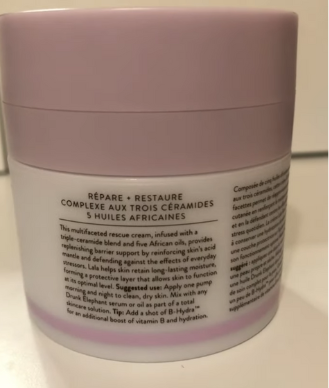
The formula centers on three ceramides: Ceramide AP, Ceramide EOP, and Ceramide NP. These are skin-identical lipids that help rebuild the barrier’s structure. They’re paired with phytosphingosine, another lipid that supports barrier function.
The “whipped” texture comes from a blend of six African oils:
- Marula oil (high in oleic acid, antioxidants)
- Baobab oil (fatty acids, vitamins A, D, E)
- Mongongo oil (vitamin E, polyunsaturated fats)
- Ximenia oil (omega fatty acids)
- Kalahari melon seed oil (linoleic acid, vitamin E)
- Passionfruit seed oil (linoleic acid)
You also get sodium hyaluronate (a form of hyaluronic acid) for humectant hydration, plus emollients like Caprylic/Capric Triglyceride.
The ceramide blend is what drives barrier repair. When your skin’s lipid layer is depleted from actives, over-cleansing, or environmental stress, ceramides help restore its protective function.
Note that the formula does not contain retinol, niacinamide, or dedicated anti-aging actives. It’s purely a barrier-support moisturizer. If you’re looking for treatment benefits, you’ll need to layer those separately.
How to Use Drunk Elephant’s Lala Retro Whipped Cream

Start with clean, dry skin. If you’re using toners or essences, apply those first before moving to moisturizer.
- How much to use: Start with one pump for full face. If you have oily or combination skin, even one pump can be too much and start to feel heavy. For dry skin, you may need more coverage. Adjust based on how your skin absorbs it.
- If you’re using tretinoin or retinoids: Mix 1-2 pumps of Lala with your tretinoin before applying. This is the method many users find most helpful for reducing irritation without diluting the retinoid. You can also apply tretinoin first, then layer Lala after but mixing tends to prevent stinging better.
- If you’re using multiple serums or actives: Mix products together in your palm before application instead of layering each one separately. Stacking too many layers causes pilling. If you prefer to layer, wait between each step and use minimal product.
- If you’re layering under sunscreen: Use a minimal amount in the morning and give it time to absorb before applying SPF. If pilling happens, switch to nighttime-only use and choose a lighter morning moisturizer like Drunk Elephant Protini instead.
- If your skin feels too heavy or greasy: You’re using too much. Cut the amount down. If it still feels heavy, apply it only at night or only on dry patches. Some users in humid climates or with naturally oily skin find it works best as a spot treatment rather than full-face coverage.
- If you’re introducing it for the first time: Patch test first, especially if you’re acne-prone. Watch for closed comedones or irritation. If breakouts appear, discontinue immediately—this formula doesn’t work for everyone.
How long it lasts: One jar typically lasts 3-4 months with twice-daily use.
Common mistakes to avoid: Applying too much product at once, layering it over serums without mixing first when pilling occurs, using it in the morning under makeup if you have oily skin (it can feel heavy and may break down foundation).
Pros
- Barrier repair for dry, sensitive, or tretinoin-irritated skin. Users with compromised barriers report noticeable softening and reduced redness within weeks. The ceramide-oil blend provides lasting comfort, especially overnight.
- Layers well with actives when mixed (not stacked). Tretinoin users will sometimes mix 1-2 pumps of Lala with their retinoid instead of layering. This reduces irritation without diluting efficacy.
- Lightweight whipped texture. Despite being rich, the formula melts into skin without feeling heavy. It doesn’t sit on the surface like some thick creams.
- Long-lasting hydration. People report waking up with plump, glowing skin. The ceramide-oil combination holds moisture overnight better than lightweight gels.
- Fragrance-free and silicone-free. If you’re sensitive to synthetic fragrance or silicones, this checks both boxes.
- Airless jar packaging protects ingredient stability. The pump design prevents oxidation and contamination. Each pump dispenses a controlled amount.
Cons
- May break out acne-prone and oily skin. Coconut-derived oils and marula’s high oleic acid content are comedogenic for some people.
- Scent perception. Some users detect a smell described as play-dough, yogurt-like, or cheap floral. This is likely from fermented green tea extract and botanical oils, but can be unexpected.
- Pills when layered with some serums. If you apply multiple products, Lala can ball up instead of absorbing. The workaround is mixing products in your palm before application.
- Too heavy for combination, oily, warm climates or summer use. Full-face application may feel greasy. Users in humid areas or with oily T-zones may find that it works best as a nighttime spot treatment on dry patches.
Conclusion: Is Drunk Elephant’s Lala Retro Cream Worth It?
Drunk Elephant’s Lala Retro Whipped Cream is a rich, whipped barrier-support cream built around a triple-ceramide blend (ceramides AP, EOP, NP) plus cholesterol and phytosphingosine, with a mix of five African oils (including marula). It’s formulated at a skin-friendly pH around 5.2 and is positioned as free of fragrance and essential oils.
If your skin is dry, rough, or feeling overworked from tretinoin, retinoids, or acids, this moisturizer can help skin feel more comfortable simply by reducing water loss and cushioning the barrier.
The main drawback is that it can be too much for some people. If you’re oily or acne-prone (or you tend to clog easily), the richer oils and emollients may feel heavy, and some reviewers flag it as better suited to drier skin types.
If you fit the dry, sensitive, or actives-user profile, patch test first—especially if you have any history of sensitivity to coconut-derived emollients or marula oil.
If your skin feels dry or easily irritated and you want a nourishing ceramide moisturizer that helps hold onto moisture overnight, Lala Retro is worth considering.
Frequently Asked Questions
What is Lala Retro Whipped Cream good for?
Lala Retro Whipped Cream is best for dry, dehydrated, or barrier-stressed skin, especially if skin feels tight, flaky, or easily irritated from actives like tretinoin, retinol, or exfoliating acids. It’s a rich ceramide moisturizer that helps support the skin barrier and lock in moisture, so it’s often used as a night moisturizer or as a buffer in skincare.
What does the Lala Retro Whipped Cream smell like?
Even though Lala Retro is fragrance-free (no added perfume or essential oils), many people notice a natural scent from the oils and ingredients. Most descriptions land in the range of play-dough, yogurt-like, or a slightly funky/fermented smell. Some people don’t smell much at all, and for others it fades after application—but if you’re very scent-sensitive, it’s worth sampling first.
Does Lala Retro contain parabens or sulfates?
No, Lala Retro’s formula is free from parabens, sulfates, phthalates, retinyl palmitate, essential oils, and synthetic fragrance.
What’s the difference between Lala Retro and Protini?
Lala is richer (better for dry, irritated, or barrier-compromised skin). Protini is lighter and protein-focused (better if you layer multiple serums or prefer a gel-cream texture).
