
18 Best Ingredients for Skin Firming: A Complete Guide for 2026
Shopping for firming products can feel overwhelming when every cream and serum promises to lift, tighten, and restore your skin. What actually helps is understanding which active ingredients have solid science behind them—and which ones are just marketing hype.
The ingredients in this guide have been studied for their ability to support collagen production, improve elasticity, and provide visible tightening effects.
Some work quickly but offer temporary results, while others take months to show changes that last. Some are gentle enough for daily use, but others need to be introduced slowly to avoid irritation.
Knowing what each ingredient actually does makes it easier to build a routine that matches your skin’s needs and your tolerance level.
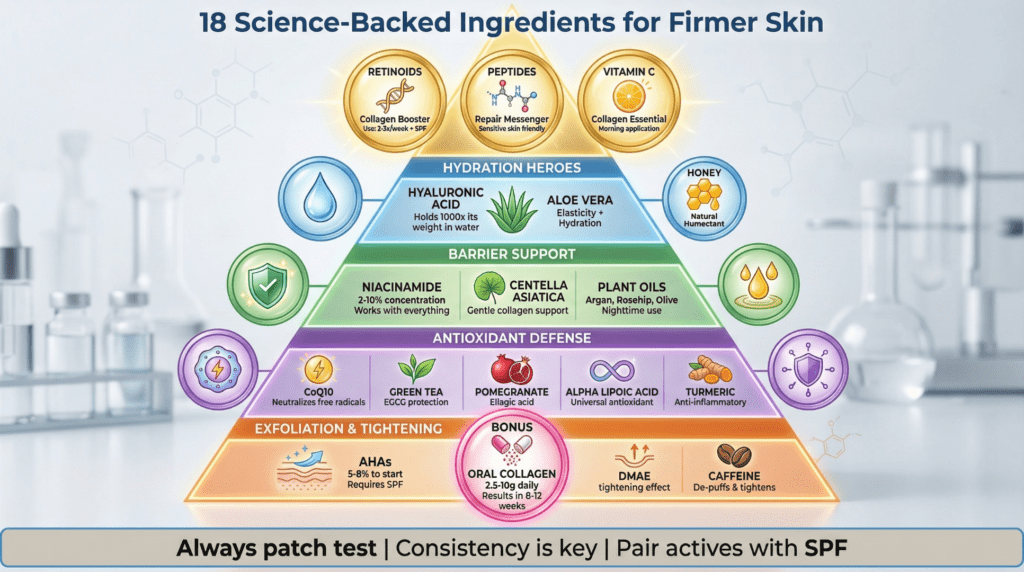
18 Best Ingredients to Tighten Skin and Improve Elasticity
1. Retinoids (Retinol, Retinal, Tretinoin)
Retinoids are vitamin A derivatives that consistently rank as the most researched and effective ingredients for firmness. They work by stimulating collagen production deep in the dermis while simultaneously slowing down the enzymes that break collagen apart.
This dual action makes them particularly effective for sagging, fine lines, and loss of bounce.
Prescription tretinoin is the strongest form and has decades of research supporting its use. Over-the-counter retinol and retinal are gentler alternatives that convert to the active form in your skin, making them ideal for building tolerance.
Start with 2 to 3 applications per week and always pair with moisturizer and daily broad-spectrum sunscreen, since retinoids increase sun sensitivity.
Best for: Wrinkles, uneven texture, and sun-related aging, including gradual loss of firmness.
2. Peptides
Peptides are short chains of amino acids that act as messengers, signaling your skin to produce more collagen and elastin. When applied topically, they essentially trick your skin into thinking it needs to repair itself, which triggers the production of structural proteins.
Signal peptides and biomimetic peptide blends are the most common types found in firming serums.
These ingredients are particularly good if you have sensitive skin or cannot tolerate retinoids, since peptides deliver firming benefits with minimal irritation.
They also improve hydration, which makes skin look plumper and smoother almost immediately while the deeper structural changes develop over weeks.
Best for: Anyone who wants firmer, more resilient skin without harsh actives or visible irritation.
3. Vitamin C (Ascorbic Acid and Derivatives)
Vitamin C is a direct cofactor in collagen synthesis, meaning your skin literally cannot build new collagen without it. As a powerful antioxidant, it also protects existing collagen from UV radiation and pollution damage.
Regular use leads to brighter, more even-toned skin while improving firmness from within.
L-ascorbic acid is the most potent form but can be unstable and irritating. Derivatives like sodium ascorbyl phosphate and magnesium ascorbyl phosphate are gentler and more stable, though slightly less potent.
Apply vitamin C serum in the morning under sunscreen for most protection throughout the day.
Best for: Dull, sun-exposed, or unevenly toned skin that also needs firming support.
4. Hyaluronic Acid
Hyaluronic acid is a humectant that attracts and binds up to 1,000 times its weight in water. As we age, natural hyaluronic acid levels decline along with collagen, which leads to that deflated, crepey appearance.
Topical hyaluronic acid deeply hydrates the skin and plumps fine lines caused by dehydration.
Different molecular weights penetrate to different depths. Low molecular weight HA penetrates deeper for structural hydration, while high molecular weight HA sits on the surface to smooth and protect.
Many serums mix many weights for comprehensive hydration.
Layer it under moisturizer while your skin is still damp for best results.
Best for: Dehydrated, thin, or crepey skin that looks deflated as opposed to just saggy.
5. Niacinamide (Vitamin B3)
Niacinamide is one of the most versatile ingredients in skincare. It strengthens the skin barrier by promoting ceramide synthesis, improves elasticity, reduces the appearance of fine lines, and provides antioxidant protection.
It also plays well with other actives, making it easy to incorporate into any routine.
Concentrations between 2% and 10% are most common, with higher percentages offering stronger effects. Unlike some actives, niacinamide is gentle enough for twice-daily use and rarely causes irritation.
It works especially well when combined with retinoids, peptides, or vitamin C.
Best for: Sensitive or reactive skin that needs firming without irritation or strong actives.
6. Coenzyme Q10 (CoQ10)
CoQ10 is naturally present in your skin cells, where it helps produce energy and neutralizes free radicals. Levels decline with age and sun exposure, which contributes to collagen breakdown and loss of firmness.
Topical application helps restore these levels and reduces oxidative stress that speeds up aging.
Research shows that consistent use of CoQ10 can improve skin resilience and reduce the depth of wrinkles over time. It works particularly well when combined with vitamin E and other antioxidants for comprehensive protection against environmental damage.
Best for: Anyone exposed to pollution, UV radiation, or other environmental stressors that speed up aging.
7. Alpha Hydroxy Acids (Glycolic Acid and Lactic Acid)
AHAs are chemical exfoliants that dissolve the bonds holding dead skin cells on the surface. This process reveals fresher skin underneath and stimulates collagen production in the dermis.
Glycolic acid has the smallest molecule and penetrates deepest, while lactic acid is gentler and more hydrating.
Regular use of AHAs smooths rough texture, evens tone, and improves the penetration of other products. Start with lower concentrations (5% to 8%) a few times per week and increase gradually as your skin adapts.
Always use sunscreen when using AHAs, since they increase photosensitivity.
Best for: Rough, dull, or sun-damaged skin that needs both exfoliation and firming.
8. DMAE (Dimethylaminoethanol)
DMAE is known for producing a noticeable tightening effect relatively quickly. While some of this effect is temporary, consistent use appears to improve elasticity over time.
The exact mechanism is still being studied, but it seems to affect cell membrane stability and reduce inflammation.
Many neck creams and instant-firming serums contain DMAE for its visible lifting effect. Some people experience dryness or mild irritation, so start with a small amount and monitor your skin’s response.
The effects are most noticeable on the jawline, neck, and around the eyes.
Best for: Quick visible tightening of the lower face, neck, or eye area before events or daily use.
9. Caffeine
Caffeine constricts blood vessels and reduces fluid retention, which temporarily tightens and de-puffs the skin. This makes it particularly popular in eye creams and body firming lotions. While the effect is temporary, it can make a noticeable difference in how firm and toned your skin looks throughout the day.
Caffeine also has antioxidant properties that protect against UV and environmental damage. For best results, apply caffeinated products in the morning when puffiness is most obvious.
On the body, caffeine creams work best when massaged into areas prone to fluid retention.
Best for: Under-eye bags, puffiness, or body areas like thighs and upper arms.
10. Centella Asiatica (Cica or Gotu Kola)
Centella asiatica is a botanical ingredient with documented wound-healing and collagen-supporting properties. Research suggests it stimulates collagen synthesis while providing antioxidant and anti-inflammatory benefits.
This makes it valuable for improving both firmness and skin barrier health.
Many Korean and Asian skincare brands feature centella in their “cica” creams and serums. It’s gentle enough for sensitive, irritated, or compromised skin while still delivering meaningful firming support over time.
Look for products with high concentrations of centella extract or isolated active compounds like madecassoside.
Best for: Sensitive, red, or barrier-impaired skin that needs gentle firming support.
11. Green Tea Extract
Green tea is rich in polyphenols, particularly EGCG, which protect collagen from oxidative damage caused by UV exposure and pollution. These compounds also have anti-inflammatory properties that help prevent the breakdown of elastin and other structural proteins.
Green tea extract appears in many firming serums, moisturizers, and masks. Some people also use cooled green tea as a toner or in DIY face masks.
The protective benefits are added, so consistent use provides the best results for maintaining firmness and preventing future sagging.
Best for: Daily antioxidant protection, especially if you spend time outdoors or in polluted environments.
12. Aloe Vera
Fresh aloe vera gel has been clinically shown to improve skin elasticity and hydration when used consistently. It contains vitamins, enzymes, and polysaccharides that support skin structure and moisture retention.
Studies have found that regular application can reduce the appearance of fine lines and improve overall skin texture.
Pure aloe gel works best, since many commercial products contain mostly water and thickeners with minimal actual aloe. If you have an aloe plant, you can slice a leaf and apply the fresh gel directly to clean skin. Otherwise, look for products with aloe listed as one of the first few ingredients.
Best for: Gentle daily hydration and firmness support, especially for dry or irritated skin.
13. Alpha Lipoic Acid
Alpha lipoic acid is called a universal antioxidant because it works in both water-based and oil-based environments in your skin. This means it can protect the interior and exterior of skin cells from free radical damage. It also helps reduce cellular inflammation and supports energy production in skin cells.
Research suggests that alpha lipoic acid can smooth fine lines and improve overall skin tone with consistent use. It pairs well with vitamins C and E for comprehensive antioxidant protection.
Most products contain concentrations between 1% and 5%, used once a day.
Best for: Early signs of aging, dullness, or skin exposed to high levels of pollution and UV radiation.
14. Pomegranate Extract
Pomegranate is rich in polyphenols and ellagic acid, which protect collagen fibers from enzymatic breakdown and oxidative damage. These compounds have been shown to support firmness and improve the appearance of photo-aged skin. Pomegranate also has anti-inflammatory properties that help maintain healthy skin structure.
Look for serums or creams with pomegranate extract listed prominently in the ingredients. It works well in combination with other antioxidants like vitamin C and green tea for layered protection throughout the day.
Best for: Antioxidant protection and support for collagen preservation, especially in mature or sun-damaged skin.
15. Natural Plant Oils (Argan, Rosehip, Olive)
Certain plant oils contain vitamins A and E along with essential fatty acids that support skin barrier function and provide antioxidant protection. Argan oil is rich in vitamin E and squalene.
Rosehip oil contains natural retinoids and vitamin C.
Olive oil provides polyphenols and oleic acid.
These oils work best as part of your nighttime routine, either alone or mixed into your moisturizer. They help prevent transepidermal water loss while delivering fat-soluble nutrients that support firmness from within. Look for cold-pressed, organic versions for the highest concentration of active compounds.
Best for: Dry, mature, or compromised skin that needs both moisture and protective nutrients.
16. Turmeric Extract
Turmeric contains curcumin and other compounds with powerful antioxidant and anti-inflammatory properties. These may help protect elastin and collagen from degradation while supporting overall skin health.
Turmeric also contains vitamins C, E, and K, which may promote firmness and tone.
Topical turmeric products avoid the staining that can occur with DIY turmeric masks. Look for standardized extracts or products specifically formulated to prevent yellowing of the skin. Turmeric works well in nighttime serums or creams combined with other botanicals.
Best for: May protect skin elasticity and improve uneven tone.
17. Oral Collagen Peptides
While not a topical ingredient, oral collagen peptides are worth mentioning for their documented effects on skin firmness. Clinical studies show that taking collagen supplements daily can improve skin elasticity, hydration, and texture after 8 to 12 weeks. Collagen can also assist with satiety for weight loss.
Hydrolyzed collagen peptides are broken down into smaller molecules that can be absorbed and used by the body. Look for products from reputable brands with clinical backing.
Typical dosing ranges from 2.5 to 10 grams daily, taken consistently for best results.
Best for: Those comfortable with supplements who want to support firmness from the inside out.
18. Honey
Honey is a natural humectant with antioxidant, antibacterial, and anti-inflammatory properties. It helps skin keep moisture while providing protective compounds that slow the appearance of aging.
Raw, unprocessed honey contains the highest concentration of useful enzymes and compounds.
You can use honey as a standalone mask, mix it with other ingredients like yogurt or aloe, or look for cleansers and masks that feature honey prominently. Leave honey masks on for 10 to 15 minutes before rinsing.
The hydrating and plumping effects are noticeable quickly, while antioxidant benefits accumulate with regular use.
Best for: Dehydrated, irritated, or acne-prone skin that needs extra hydration.
Conclusion
If you can only choose one category for long-term firmness, retinoids win because of their proven ability to stimulate collagen production and improve elasticity at the dermal level where structure is actually determined. Prescription tretinoin has the most research, but over-the-counter retinol and retinal work well for most people when used consistently.
That said, retinoids work significantly better when supported by complementary ingredients. The most effective approach combines a gentle retinoid at night with vitamin C and antioxidants in the morning, plus a daily moisturizer containing peptides and niacinamide.
Add hyaluronic acid whenever your skin feels dry or thin.
For someone just starting out, the practical routine would be:
- Cleanser, hyaluronic acid serum, retinol cream (2-3 nights per week to start), and a moisturizer with peptides.
- In the morning: cleanser, vitamin C serum, moisturizer with niacinamide, and broad-spectrum sunscreen.
From there, add targeted treatments like caffeine eye cream or DMAE serums based on specific concerns.
This layered approach helps address firmness from many angles while minimizing irritation and maximizing results.
Frequently Asked Questions
Which ingredient shows visible firming results the fastest?
DMAE and caffeine provide the quickest visible tightening, often within minutes to hours of application. The effect comes from temporarily constricting tissue and reducing puffiness as opposed to building new collagen.
Egg white masks and certain clay masks also create an immediate tightening sensation.
For actual structural improvement, retinoids, peptides, and vitamin C need consistent use for 4 to 12 weeks before you’ll notice any changes in firmness and elasticity.
Can I use many firming ingredients together or will they cancel each other out?
Most firming ingredients work through different mechanisms, so combining them often provides better results than using just one. Retinoids stimulate collagen production, vitamin C protects existing collagen, peptides signal repair, and hyaluronic acid hydrates.
The key is introducing new actives slowly to avoid irritation.
Start with one active ingredient, let your skin adapt for 2 to 4 weeks, then add the next. Some combinations need careful timing, like using vitamin C in the morning and retinoids at night, or applying niacinamide separately from pure L-ascorbic acid.
Are expensive firming serums actually better than affordable drugstore options?
Price doesn’t always correlate with effectiveness. What matters most is the concentration and formulation of active ingredients, not the brand name or packaging.
A $15 drugstore retinol at 0.5% concentration can work just as well as a $150 luxury version with the same percentage.
That said, some expensive products use patented delivery systems, higher-quality ingredients, or more elegant formulations that feel better on the skin. Check the ingredient list and concentration before judging by price alone. Generic versions of proven actives often perform nearly identically to prestige brands.
Will firming ingredients work on loose skin after significant weight loss?
Topical ingredients can improve texture, hydration, and mild laxity, but they have real limitations with severely stretched skin. Retinoids, peptides, vitamin C, and niacinamide can tighten moderately loose skin and improve overall quality. For significant loose skin with a lot of excess tissue, especially after major fat loss, in-office procedures like radiofrequency, ultrasound therapy, or surgical options often deliver more noticeable improvement.
Topical ingredients work best as maintenance and support as opposed to as primary treatment for severe cases.
How long do I need to use firming ingredients before deciding if they work?
Give each new active ingredient at least 8 to 12 weeks of consistent use before evaluating results, since collagen production and skin cell turnover take time. Take photos in the same lighting every 4 weeks to track subtle changes you might not notice day to day.
For retinoids specifically, meaningful improvement often takes 3 to 6 months of regular use.
Temporary tightening from ingredients like DMAE or caffeine shows up immediately but fades within hours, so those work differently than structural ingredients that create lasting change.
Can natural ingredients like aloe and honey really firm skin or are synthetic actives always better?
Natural ingredients like aloe vera, honey, plant oils, and botanical extracts provide real benefits including hydration, antioxidant protection, barrier support, and mild tightening. Clinical studies confirm that ingredients like aloe and pomegranate can improve elasticity and reduce fine lines with consistent use.
However, for pronounced sagging or deep wrinkles, they typically work best as part of a broader routine that includes research-backed synthetic actives like retinoids, peptides, or vitamin C.
Think of natural ingredients as excellent supporting players that enhance results and maintain skin health as opposed to standalone solutions for significant firming needs.
Is there a difference between firming ingredients for the face versus the body?
The same active ingredients work on both face and body, but products are often formulated differently. Body products typically come in larger, more affordable packages with thicker textures designed to cover more surface area.
They may contain higher concentrations of ingredients like caffeine or AHAs since body skin is generally less sensitive than facial skin. Retinoids and peptides work the same way whether applied to the face, neck, chest, or other body areas.
If you have a firming serum you love but can’t afford to use it all over, apply it to priority areas like the neck and décolletage, then use a more affordable body lotion with similar but less expensive actives everywhere else.
