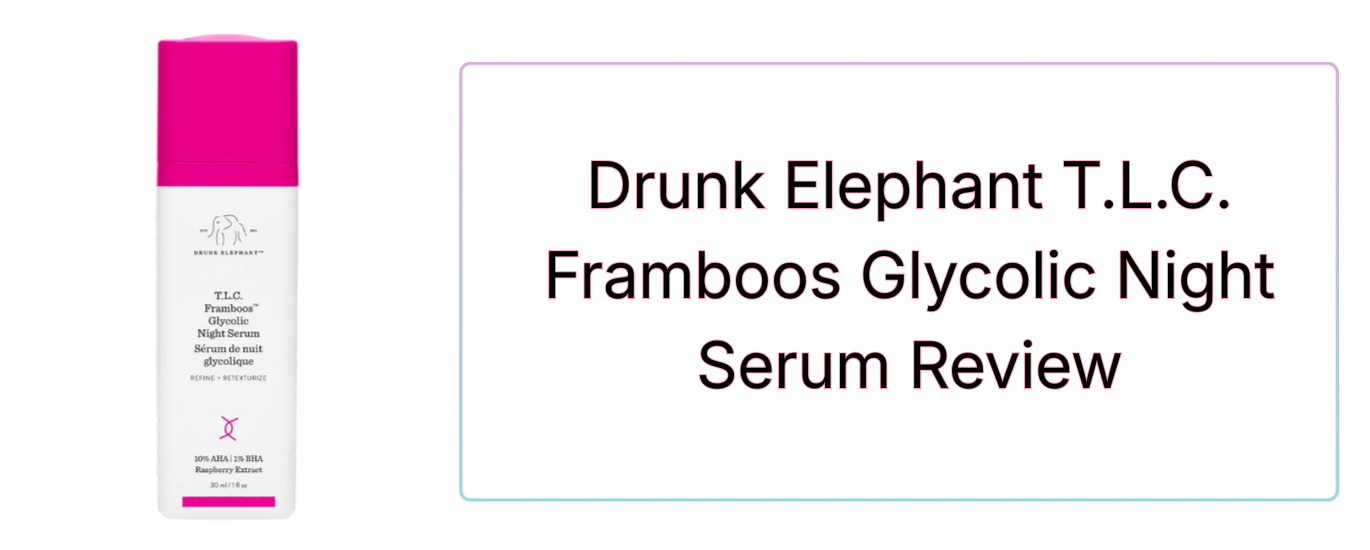
Drunk Elephant T.L.C. Framboos Glycolic Night Serum Review
The highly-anticipated Drunk Elephant T.L.C. Framboos Glycolic Night Serum promises radiant glow and baby-smooth texture.
Known for its powerful 10% AHA/1% BHA blend, this luxury exfoliant is often cited by users as the go-to solution for stubborn closed comedones and fading difficult post-acne marks (PIH).
But is the steep price tag truly worth the investment when effective dupes like Farmacy and Paula’s Choice exist?
This in-depth review breaks down what the formula does, how to use it without overdoing it, and who’s more likely to see results versus who should skip it entirely.
As an Amazon Associate I may earn on qualifying purchases at no extra cost to you.
What is T.L.C. Framboos Glycolic Night Serum?
T.L.C. Framboos is a night serum by Drunk Elephant that’s built around 10% alpha hydroxy acids (four different types) and 1% beta hydroxy acid. The AHAs—glycolic, lactic, tartaric, and citric acid—work on the surface to remove dead skin cells and fade discoloration. The BHA (salicylic acid) cleans out pores from the inside.
The formula is designed for people dealing with stubborn texture issues like closed comedones that sit under the skin and never come to a head, rough patches that make makeup go on uneven, dark marks left behind from breakouts, and skin that just looks flat.
It does this by speeding up exfoliation so the old, built up surface layer loosens and sheds more quickly, which helps reveal newer skin underneath.
The pH sits at 3.5, which is acidic enough to exfoliate effectively but not so low that it causes unnecessary irritation. If you’re looking for clinical-grade exfoliation without in-office treatments, this formula delivers a similar level of strength.
T.L.C. Framboos Glycolic Night Serum Ingredients
The Drunk Elephant T.L.C Framboos Glycolic Resurfacing Night Serum is a high strength overnight exfoliating serum that helps to smooth uneven texture and reduce the look of clogged pores.
The formula also includes supportive ingredients like glycerin, aloe, cactus extract, raspberry extract, and allantoin, which can make it feel less stripping than some acid serums, but it can still irritate if you use it too often.
Key Ingredients
| Ingredient | Function | What It Does |
| Glycolic Acid (AHA) | Removes surface dead cells | Fastest penetration; targets texture and discoloration |
| Lactic Acid (AHA) | Exfoliates and hydrates | Gentler than glycolic; adds moisture while exfoliating |
| Salicylic Acid (BHA) | Cleans out pores | Oil-soluble; reaches inside pores to prevent congestion |
| Raspberry Extract | Provides antioxidants | Soothes and reduces redness from acid exposure |
| Sodium Hyaluronate | Draws in moisture | Prevents dehydration during exfoliation process |
| Horse Chestnut | Strengthens capillaries | Reduces reactivity and redness in sensitive areas |
The formula also includes aloe vera and glycerin to calm and hydrate. There’s no fragrance, no essential oils, no silicones, and no drying alcohols—perfect for a compromised skin barrier or if you react to additives.
The raspberry extract gives it a subtle berry scent, but it’s not from added fragrance. The texture is a lightweight gel that absorbs quickly without leaving a sticky finish.
Check current availability of T.L.C. Framboos Glycolic Night Serum on Amazon
T.L.C Framboos Glycolic Night Serum for Age Spots & Uneven Tone
Closed comedones are those stubborn, under-the-skin bumps that never form a whitehead and just sit there and make skin look rough and uneven. Scrubs can’t reach them, and low-strength acids often take forever to make a dent. That’s where a higher-strength glycolic formula comes in.
With a 10% AHA blend, you’re pushing faster cell turnover right where oil and dead skin trap debris beneath the surface. Glycolic acid has the smallest molecule in the AHA family, so it tends to penetrate more efficiently than gentler options like lactic or mandelic acid.
The change users report noticing first is usually smoother texture within about a week. The little bumps often start to visibly loosen and flatten in the 2–3 week range. When it works, the finish isn’t just a result of less bumpiness, it’s a soft, satin-like feel when you run your fingers over your skin.
Another ingredient, salicylic acid (BHA), is oil-soluble so it can work inside the pore lining while the AHAs handle surface buildup. That surface + pore combo is why multi-acid formulas tend to outperform single-acid products for congestion that doesn’t budge.
If you’ve already tried 5–7% glycolic toners and got minimal results, stepping up to a stronger concentration may be what finally moves the needle. The trade-off is tolerance: this isn’t usually an “every night forever” product and if you use it too often irritation will catch up fast.
T.L.C Framboos Glycolic Night Serum for Post-Acne Marks and Hyperpigmentation Fading
If you’re dealing with dark spots left behind after breakouts clear, glycolic acid is one of the most researched ingredients for accelerating fade time.
The acid speeds up your natural cell turnover, which means pigmented cells shed faster and are replaced by fresh, evenly-toned cells.
This serum is best for post-inflammatory hyperpigmentation (flat brown or red marks) rather than atrophic scars (indented pits). The formula also includes soothing antioxidant support like raspberry extract and horse chestnut, which can help support the skin barrier when you are using stronger acids.
Some people have experienced enhanced results from combining this serum with a retinoid (used on alternate nights). The glycolic acid removes surface pigmentation while the retinoid works deeper to normalize melanin production. But that combination requires careful frequency management to avoid over-exfoliation.
Shop T.L.C. Framboos Glycolic Night Serum on Amazon
T.L.C Framboos Glycolic Night Serum for Fine Lines and Dullness
Deep wrinkles are not something any exfoliating serum can erase. What T.L.C. Framboos can do is make fine lines look less noticeable by smoothing the top layer of skin.
Since the serum’s formula is a nightly chemical exfoliant, when built up dead skin and rough texture is reduced, the skin surface looks more even. That is usually what people mean when they say their skin looks brighter after using an acid serum.
The BHA side helps if clogged pores and congestion are part of what makes your skin look dull. Clearing that out can make skin look clearer overall, which also makes lines look less prominent by comparison.
If fine lines are your main concern and your skin gets irritated easily, this is a product to use carefully.
Keep it away from the immediate eye area, avoid combining it with other strong actives on the same night, and wear sunscreen during the day since exfoliating acids can make skin more reactive to sun.
Irritation, Frequency, and the Real-Use Limit
With T.L.C. Framboos Glycolic Night Serum, the most common mistake is treating it like a nightly glow product. For a lot of people, the formula is effective but easy to overdo, so the real challenge is finding a schedule your skin can handle.
If your skin is resilient and you already use acids without trouble, you might do well using it a few nights a week. If you are new to chemical exfoliation, have dry skin, or get reactive easily, keeping it to once or twice a week is often the safer starting point. Trying to force more frequent use is where irritation shows up.
A mild tingle right after application can happen with a strong acid serum. What you do not want is burning, lingering stinging, or redness that is still obvious the next day. That usually points to using it too often, applying it on damp skin, or pairing it with other strong actives the same night.
When you over-exfoliate, you do not get better results. You usually get a stressed barrier that makes everything feel worse, including your moisturizer.
Signs you may be overdoing it:
- Persistent tightness or dryness that does not improve with moisturizer
- Stinging when you apply basic products, especially in the morning
- Skin that suddenly feels sensitive to sun, wind, or hot water
- Visible flaking that keeps coming back
- New breakouts in areas you do not normally clog
If any of these show up, scale back hard. Take a break, then restart at a lower frequency on fully dry skin, and keep the rest of your routine simple on the nights you use it.
How to Use the T.L.C. Framboos Glycolic Night Serum
Apply T.L.C. Framboos on fully dry skin. After cleansing, pat dry and give your skin a few minutes to air dry before you put it on. Applying acids to damp skin can make them feel stronger and more irritating.
Use less than you think. A pea sized amount is enough for the whole face because the gel spreads easily. Adding more does not make it work better, it just raises the chance of redness and dryness.
How to use Framboos Step-By-Step:
- Clean face with cleanser
- Wait until skin is completely dry
- Apply T.L.C. Framboos Glycolic Night Serum
- Wait 5 minutes
- Apply moisturizer
Do not skip moisturizer. Exfoliation can leave skin feeling tight, and a basic moisturizer helps keep the barrier comfortable.
Frequency guidelines:
- Week 1–2: Use once per week only. Let your skin adjust.
- Week 3–4: If no irritation, try twice per week with 2–3 days between applications.
- Week 5+: If your skin tolerates it well, you can attempt 3x per week. Many people stay at 2x permanently.
Never use on the same night as retinoids, vitamin C (if it’s low-pH), or other exfoliating acids. Pick one active per night. If you want to use both Framboos and a retinoid, alternate nights strictly. For example, Framboos Monday/Wednesday, retinoid Tuesday/Thursday, rest the other days.
If your skin feels dry or tight, try the sandwich method: apply a thin layer of moisturizer first, then Framboos on top, then another layer of moisturizer. This slows penetration and reduces irritation while still allowing the acids to work.
Always use SPF 50+ the day after application. Freshly exfoliated skin is more vulnerable to UV damage, which can accelerate pigmentation and undo your progress.
Who Should Skip This Product
- If you have active rosacea, compromised barrier function, or naturally reactive skin, this formula is likely too strong. People in this category have reported redness, stinging, and worsening symptoms.
- Skip it if you’re already using prescription tretinoin or another strong retinoid and haven’t built full tolerance yet. Adding this serum while your skin is still adjusting to the retinoid will overload your barrier.
- Skip it if you’re pregnant or breastfeeding unless your doctor approves. The safety data on high-concentration glycolic acid during pregnancy is limited.
- If you have atrophic (indented) acne scars, this product won’t address the structural depth. It works on pigmentation and surface texture, not on physical indentations that require collagen rebuilding.
- Very dry or dehydrated skin types need to approach this carefully. If your barrier is already compromised, introducing strong acids before repairing that barrier will make everything worse. Focus on ceramides, fatty acids, and gentle hydration first, then revisit exfoliating acids once your skin is stable.
- If you’ve had recent professional treatments—laser, microneedling, chemical peels—wait at least 4–6 weeks before introducing this product. Your skin needs full recovery time first. Always consult a dermatologist if you’re unsure.
T.L.C. Framboos Glycolic Night Serum: Pros and Cons
Pros:
- Can help with closed comedones and bumpy texture, especially if gentler exfoliants have not done much
- Often used for post acne marks and uneven tone, including hyperpigmentation from past breakouts
- Can make skin look brighter by smoothing surface dullness
- Layers well under moisturizer and doesn’t pill under sunscreen when applied correctly
- Formula includes hydrating ingredients to prevent excessive dryness
- Free of added fragrance, silicones, and denatured drying alcohols
Cons:
- Easy to overdo, and some people get irritation if they try to use it nightly
- More likely to sting or cause sensitivity if used the same night as other strong actives
- Some acne prone users report an initial breakout pattern that can be hard to tell apart from irritation
- Often not a good fit for very sensitive skin, rosacea prone skin, or a compromised barrier
- Not designed to address deep wrinkles or indented acne scars
- Requires strict sun protection the day after use
Is the Drunk Elephant T.L.C. Framboos Glycolic Night Serum Worth It?
The T.L.C. Framboos Glycolic Night Serum is a strong exfoliating serum that can help with stubborn congestion like closed comedones, bumpy texture, post acne marks, and dull looking skin, but it can also be easy to irritate your barrier if you use it too often.
It tends to suit resilient, non-sensitive skin, especially if gentler exfoliants have not done much. If you already use a retinoid, the safest way to add Framboos is on separate nights so you are not stacking strong actives in one skincare routine.
It is usually not the best pick if you have an easily irritated barrier, very dry reactive skin, or rosacea flare ups. Patch test first, then start with low frequency and only increase if your skin stays calm.
If you tolerate stronger exfoliants, this serum by Drunk Elephant can be a clean, effective upgrade from weaker toners.
Framboos vs. Dupes: Comparison & Alternatives
Farmacy Honey Glow
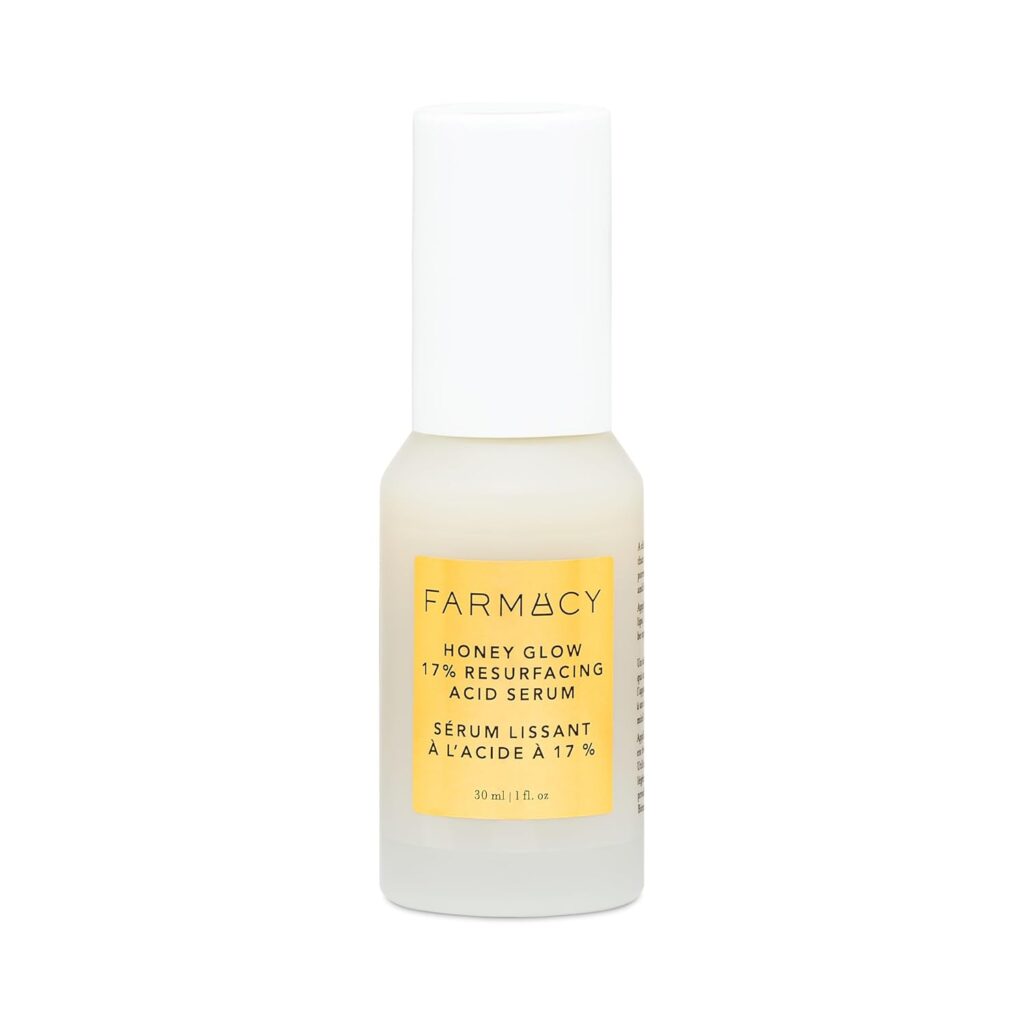
Honey Glow is the current Farmacy exfoliating night serum that gets compared to T.L.C. Framboos because it targets the same concerns like texture, clogged pores, and dullness.
It uses a high percentage acid blend built around glycolic and lactic acids, with willow bark extract as the BHA side, plus humectants like hyaluronic acid and honey based ingredients for a less dry finish.
Paula’s Choice RESIST Daily Smoothing Treatment with 5% AHA

Paula’s Choice 5% AHA is the gentler “Framboos-style” option because it’s the same type of product in a lower-strength format.
Like T.L.C. Framboos, it’s a leave-on exfoliant built around glycolic acid, and it also includes a small amount of salicylic acid for pore support.
The difference is the texture and intensity. This one is a hydrating lotion with barrier-supporting ingredients like ceramides and soothing additives, so it’s often chosen as a T.L.C. Framboos dupe for people who want the resurfacing benefits without jumping straight to a stronger multi-acid serum.
Sunday Riley Good Genes

Good Genes is the comfort pick for people who find glycolic based serums too harsh. It is described as lactic acid based, more hydrating in feel, with minimal tingling, and easier to layer, which is why it comes up so often for dry or sensitive skin types comparing it to Framboos.
Frequently Asked Questions
Does Framboos work on cystic acne?
No, Framboos is a better fit for closed comedones, surface texture, and post-acne marks. Cystic acne originates deep in the skin and requires systemic treatment or stronger prescription options. The BHA component may help prevent new breakouts, but it won’t resolve existing cystic lesions.
How long does one bottle of T.L.C. Framboos Glycolic Night Serum last?
At 2–3 applications per week using a pea-sized amount, a 30mL bottle typically lasts 2–3 months. If you use it more frequently, expect 6–8 weeks. The pump dispenses a controlled amount, which helps with product longevity.
Can I use the T.L.C. Framboos Glycolic Night Serum the morning instead of at night?
It’s not recommended to use T.L.C. Framboos Glycolic Night Serum during the day. Glycolic acid makes your skin photosensitive, and daytime use increases your UV damage risk even with sunscreen. The formula is designed for overnight application when your skin isn’t exposed to environmental stressors.
What if my skin is still peeling after 4 weeks?
Reduce frequency to once per week or take a full week off. Persistent peeling beyond the initial adjustment period signals that you’re over-exfoliating. Focus on barrier repair with ceramide-rich moisturizers and eliminate all other actives temporarily.
Does this replace a retinoid for anti-aging?
No. Glycolic acid and retinoids work through different mechanisms. Glycolic removes surface cells and accelerates turnover. Retinoids regulate cell production deeper in the skin and stimulate collagen more effectively. Many people use both on alternate nights for comprehensive results.
Can I mix Framboos with facial oil to reduce irritation?
Yes. Mixing 2–3 drops of facial oil with the serum before applying can slow penetration and add moisture. This is especially helpful if you have dry skin or if you’re in a low-humidity climate. Rosehip, squalane, or jojoba oil work well for this purpose.
Will Framboos fade melasma?
Glycolic acid can help lighten melasma, but it’s not a standalone solution. Melasma is hormone-driven and requires consistent sun protection, often combined with prescription treatments like hydroquinone or tretinoin. This serum may provide some improvement but won’t fully resolve melasma on its own. Consult with a dermatologist with any concerns.
