Best Peptides for Skin Tightening & Anti-Aging Skincare at Home
The best peptides for skin tightening do more than just sit on the skin’s surface. They’re included in skincare formulas made to gradually improve the look of firmness, smoothness, and elasticity over time.
That support becomes increasingly valuable with age. From your mid-20s onward, collagen production begins to decline by around 1% per year, and factors like sun exposure, stress, poor sleep, and excess sugar can accelerate the process.
Glycation also plays a role by stiffening collagen fibers, which reduces elasticity and makes skin look less supple over time.
Whether your goal is to stay ahead of early sagging or improve the look of more advanced skin laxity, peptides are a popular skincare ingredient for skin firming, but results depend on which type you choose.
Disclosure: This article contains affiliate links. As an Amazon Associate I earn from qualifying purchases at no extra cost to you.
What Are Peptides and How Do They Tighten Skin?
Peptides are short chains of amino acids that function as messengers within the skin.
As skin ages, collagen production slows and existing collagen gradually breaks down. The skin can recognize some of those breakdown fragments as signals linked to repair.
Peptides are used in skincare formulas to mimic some of those signals and help address visible changes like loss of firmness and rougher texture.
Think of collagen as the framework that helps keep skin firm. Elastin gives skin its bounce, while keratin helps support the outer layer. All three are proteins made from amino acids, just like peptides.
Applying peptides gives skin ingredients often used in formulas designed to improve the look of slackness, rough texture, and reduced bounce.
What Types of Peptides Are Best for Skin Tightening?
Not all peptides help firm the skin. Some focus on hydration, some help calm irritation, and others are used to target the look of expression lines.
The peptides most commonly used for firming are included in skincare formulas that help improve the appearance of elasticity, smoothness, and overall skin support with consistent use over several weeks.
There are several categories of peptides, and each works through a different biological pathway:
- Signal peptides are often chosen for products targeting creasing, loss of elasticity, and a less lifted appearance. Examples include Matrixyl (Palmitoyl Pentapeptide-4), Palmitoyl Tripeptide-1, and Palmitoyl Tetrapeptide-7.
- Carrier peptides carry trace elements like copper and are commonly used in skincare formulas targeting visible firmness and skin renewal. GHK-Cu (copper peptide) is the most well-known.
- Neurotransmitter-inhibiting peptides are used in formulas aimed at softening the look of expression lines. Argireline (Acetyl Hexapeptide-8) is the most popular in this category.
- Some peptides are used in medical or research settings rather than standard topical skincare, but those are outside the scope of this article.
Understanding which peptide targets your concern lets you choose products based on what your skin actually needs.
Matrixyl Peptides: Signal Peptides for Fine Lines and Firmness
Matrixyl peptides are widely used signal peptides in anti-aging skincare and are often found in formulas made for wrinkles, loss of bounce, and skin that no longer looks as taut.
Matrixyl is not typically associated with the peeling, photosensitivity, or adjustment period more often linked with retinoids or strong exfoliating acids, which is why peptide formulas are often preferred by people with more reactive skin.
Improvements in the look of wrinkle depth and firmness usually take time, with changes often becoming more noticeable after eight to twelve weeks of consistent use.
Rather than delivering an instant line-filling effect, peptides are typically used in formulas made to gradually improve the appearance of smoother, firmer-looking skin over time.
Top Pick for Matrixyl: The Ordinary Matrixyl 10% + HA Serum
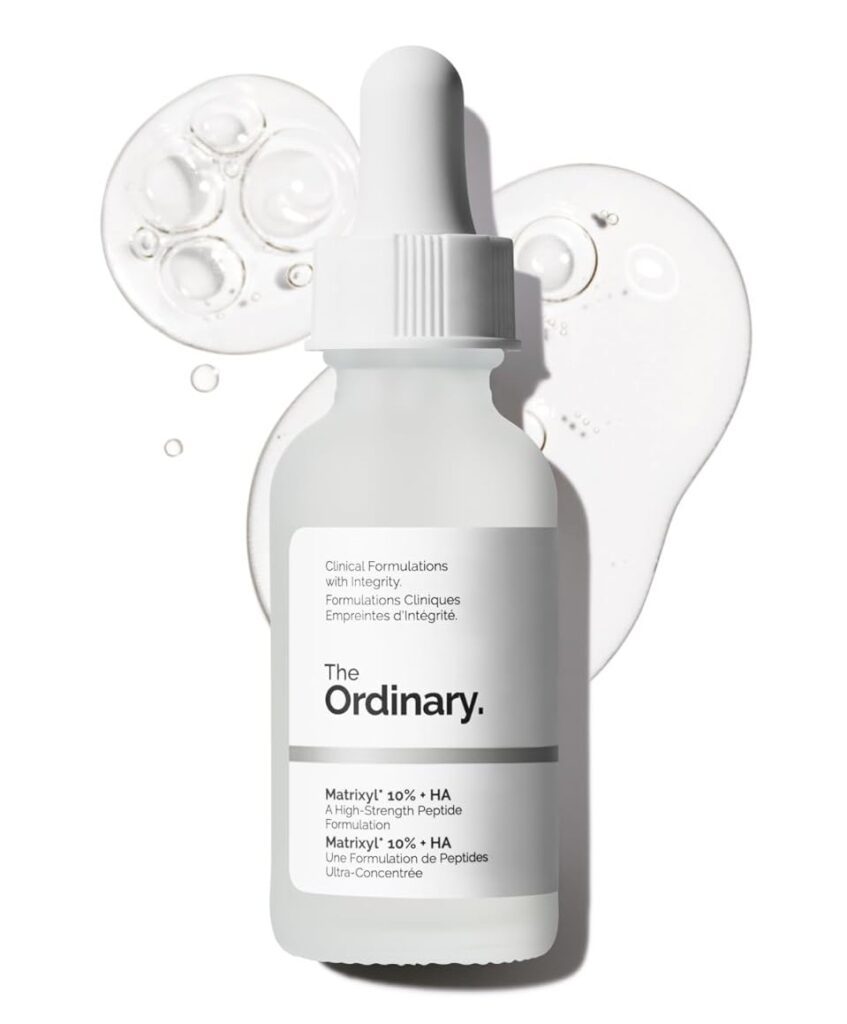
The Ordinary Matrixyl 10% + HA combines multiple Matrixyl peptides in a lightweight serum aimed at fine lines and loss of firmness.
Hyaluronic acid at various molecular weights helps hydrate the skin and pairs well with peptide serums.
This lightweight, water-based serum layers well under moisturizer without stickiness or pilling.
GHK-Cu (Copper Peptide)
GHK-Cu is a carrier peptide and one of the most researched peptides in skin rejuvenation. It’s a naturally occurring copper complex found in human plasma, saliva, and urine.
Studies suggest GHK-Cu levels decline with age, which may help explain why copper peptides are often used in skincare for firmness and skin renewal.
For skin that seems less resilient over time, copper peptides are often chosen to help improve the look of firmness, smoothness, and overall skin quality.
Why Copper Peptides Appeal to More Mature, Less Resilient Skin
Copper peptides are valued for more than basic hydration. They are often used in skincare formulas for skin that appears less firm, feels rougher, and does not look as smooth or refreshed as it once did.
GHK-Cu is especially popular in these formulas because it’s associated with skin-conditioning and renewal-focused benefits.
GHK-Cu is often featured in firming and renewal formulas because it can help address several visible skin concerns at once:
- Supports the appearance of firmer, more supple skin
- Helps improve the look of skin texture
- Often included in skincare routines focused on visible skin renewal
- Pairs well with barrier-supporting ingredients in anti-aging routines
For anyone looking for more than basic hydration, GHK-Cu is often singled out as a peptide with broader appeal for aging skin.
Other Benefits of Copper Peptides
Beyond firming, GHK-Cu is often used in skincare applied after cosmetic treatments because it’s linked to calmer, healthier-looking skin.
It may also help reduce the appearance of post-treatment redness, which can make the recovery period look and feel smoother.
Top Pick for Copper Peptide: Peach & Lily Copper Peptide Pro Firming Serum
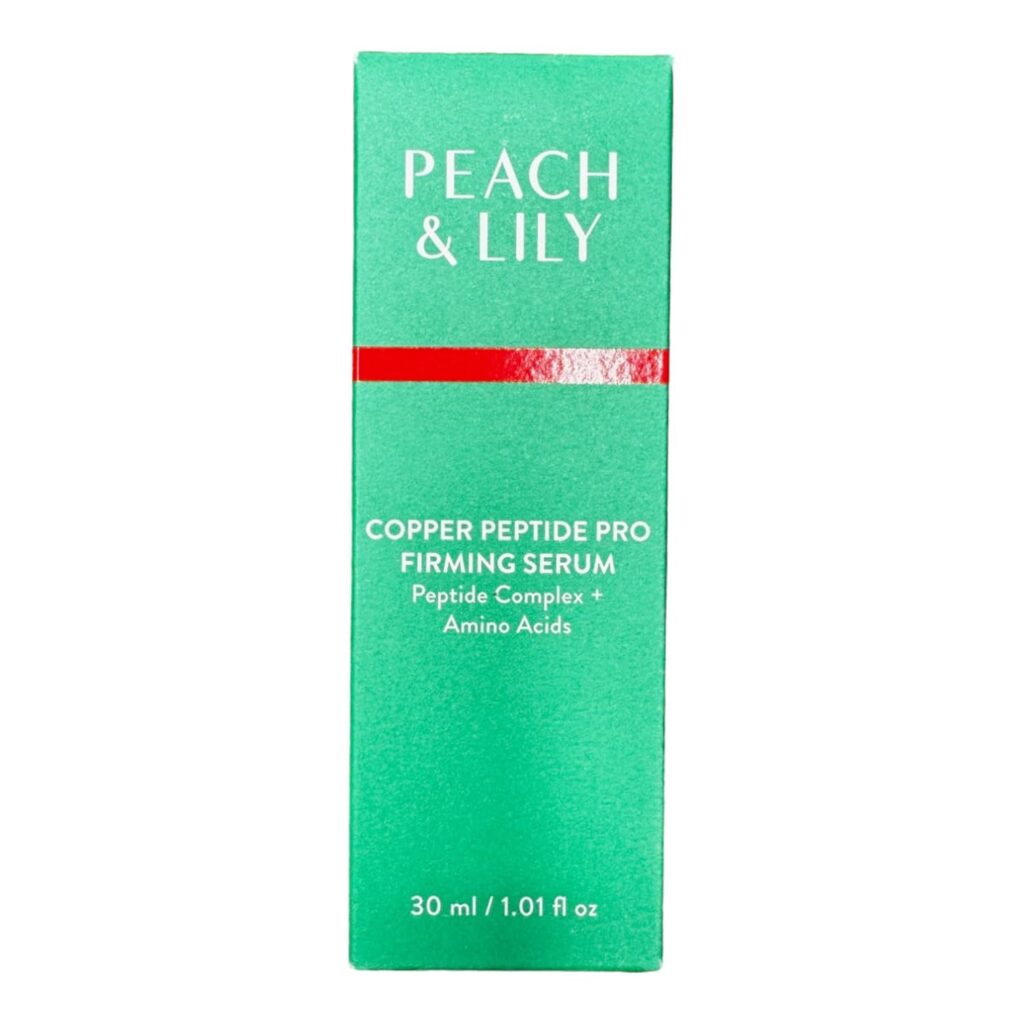
The Peach & Lily Copper Peptide Pro Firming Serum is a popular option for visible skin sagging, loss of facial definition, and more advanced signs of skin aging.
Its formula pairs GHK-Cu copper peptides with niacinamide and other skin-conditioning ingredients, making it a good fit for daily use.
For more copper peptide options, see our list of the best Korean copper peptide serums.
Known for its skin-conditioning role in cosmetic formulas, GHK-Cu is often included in products designed to improve the look of firmness, refine texture, and soften visible signs of advanced skin aging.
Like most topical peptides, it works gradually and usually requires several weeks of consistent use.
Note: Many formulators recommend using copper peptides separately from low-pH vitamin C and strong exfoliating acids, since those ingredients may affect peptide stability when applied in the same step.
Acetyl Hexapeptide-8 (Argireline): An Alternative to Botox?
Argireline is a peptide used in formulas designed to soften the look of expression lines, especially around the eyes, forehead, and mouth.
What Argireline Can and Cannot Do
Argireline is often marketed as a “natural Botox alternative,” but that claim needs context. Applied topically, it does not penetrate to the neuromuscular junction like injected botulinum toxin. Its action is surface-level and partial.
It can help soften the look of dynamic lines with regular use, but it should not be expected to deliver the same effect as injectable treatments. It’s better thought of as a topical option for people focused on expression-line concerns.
Top Pick for Argireline: The Ordinary Argireline Solution 10%

The Ordinary Argireline Solution 10% is designed for expression-prone areas such as the forehead, eye area, and around the mouth.
Apply to expression-prone areas before moisturizer rather than all over the face for the most focused effect.
Argireline works best when paired with a collagen-stimulating peptide serum.
It targets the look of expression lines, while a signal peptide like Matrixyl is more often used for bounce, tone, and a less creased overall look.
Using both can be a practical at-home strategy if you want to address expression lines while also supporting overall firmness.
Palmitoyl Tripeptide-1 and Tetrapeptide-7: The Pair Behind Matrixyl 3000
These two signal peptides make up the Matrixyl 3000 complex and are often paired in formulas targeting multiple visible signs of aging at once.
- Palmitoyl Tripeptide-1 is commonly used in formulas that target visible firmness and smoother-looking skin.
- Palmitoyl Tetrapeptide-7 is often included in products aimed at improving the look of stressed, aging skin.
Together, these peptides give Matrixyl 3000 its reputation as a more well-rounded option for formulas targeting both visible firmness and overall skin quality.
How Inflammaging Affects Skin Firmness
Daily exposure to UV rays, pollution, and other environmental stressors can slowly weaken the skin over time. As that damage builds up, skin may start to look less firm, less smooth, and more visibly aged.
That’s part of why Palmitoyl Tetrapeptide-7 is often added to formulas designed for skin that appears stressed, dull, or less resilient.
It also helps explain why Matrixyl 3000 is commonly used in products targeting both wrinkles and loss of elasticity.
Top Pick for Multi-Peptide Coverage: Peter Thomas Roth Peptide Skinjection Amplified Wrinkle-Fix Serum

The Peter Thomas Roth Peptide Skinjection Amplified Wrinkle-Fix Serum combines signal peptides, carrier peptides, and neurotransmitter-inhibiting peptides in one formula:
- Signal peptides for visible firmness and fine lines
- Carrier peptides for overall skin quality and resilience
- Neurotransmitter-targeting peptides for expression-line concerns
- Hyaluronic acid for hydration and a smoother, more comfortable feel on the skin
This multi-class approach may appeal to people looking for one formula that addresses several visible age-related concerns at once. It’s appropriate for all skin types, including sensitive and post-procedure skin.
The texture is thicker than a typical water serum, making it good for dry skin or colder climates where barrier support is as important as anti-aging action.
How to Layer Peptides With Other Skincare Ingredients
Peptides work well with most skincare ingredients, but incompatible pairings can disrupt their delicate amino acid structures before they’ve had a chance to absorb.
Peptides and Hyaluronic Acid (Best Pairing)
Hyaluronic acid draws moisture to the skin and helps it look plumper, fresher, and more hydrated, while peptides support firmer, smoother-looking skin over time.
The Ordinary Matrixyl 10% + HA takes advantage of this synergy by combining both in one formula.
Peptides and Retinol
Retinol and peptides complement each other. Retinol is better known for improving texture, tone, and fine surface lines, while peptides are more often used to target visible firmness, elasticity, and loss of bounce over time.
Apply peptide serum first and retinol second to reduce any interaction. If your skin is particularly sensitive, alternating them on different evenings works too.
Peptides and Niacinamide
Niacinamide strengthens the skin barrier, which helps retain applied peptides and keeps them working longer.
The two layer together without compatibility issues, making niacinamide an excellent supporting ingredient in any peptide-focused regimen.
What to Avoid Mixing With Peptides
Very low-pH products, including some exfoliating acids, may not be the best pairing for peptides in the same application step, since those conditions can reduce peptide stability.
High-strength vitamin C (L-ascorbic acid) at low pH can also destabilize copper peptides. The oxidative environment reduces GHK-Cu effectiveness.
However, you don’t need to remove acids or vitamin C from your routine. Apply them at different times of day or on alternating days. Peptides in the morning, exfoliating acids or vitamin C in the evening, or vice versa.
How Long Do Peptides Take to Tighten Skin?
Topical peptides usually need several weeks of consistent use before changes in wrinkles, bounce, and overall skin tone become noticeable, often around eight to twelve weeks.
Early signs like softer texture, a slightly plumper look, and more radiance may show up sooner, while visible improvements in bounce and elasticity usually take longer.
For best results, follow the specific directions on the product you are using and give it several weeks of consistent use before judging results.
Peptide serums tend to work gradually rather than instantly, which is why consistent use is more important than occasional application.
If your regimen includes retinol (evening) or exfoliating acids (two to three times weekly), apply peptides in the morning and alternate other actives in the evening.
Give any peptide product at least twelve weeks before judging effectiveness.
Frequently Asked Questions About Peptides for Skin Tightening
Do Peptides Actually Tighten Skin or Just Hydrate It?
Both, but the effects are different. Peptides are commonly used for visible loss of tone, springiness, and dull texture, while hydrating ingredients like hyaluronic acid give a quicker plumping effect that is more temporary.
Many peptide formulas also include humectants, so skin often looks smoother and more hydrated first. That early softness usually comes from hydration, while the firmer, more tightened look peptides are known for tends to take longer and depends on consistent use.
Can You Use Multiple Peptides at the Same Time?
Yes, you can use multiple peptides at the same time, and different peptide types can complement one another because they work through different mechanisms.
Signal peptides, carrier peptides, and neurotransmitter-inhibiting peptides work through different mechanisms and complement rather than compete.
The consideration isn’t limiting peptide types. It’s avoiding combining peptide serums with strong acids or low-pH vitamin C in the same application step.
Are Peptides Safe for Sensitive Skin?
Many peptide formulas are designed to be milder than stronger actives like retinoids or exfoliating acids, which is one reason they are often chosen for easily irritated skin. That said, tolerance depends on the full formula, so patch testing and gradual introduction is still recommended.
Which Peptide Serum Should You Start With?
Start with a single, well-researched product applied once daily. Layering multiple peptide products from day one makes it harder to identify what’s working.
Good beginner options by concern include:
- The Ordinary Matrixyl 10% + HA for fine lines and fading elasticity at an accessible price
- The Ordinary Argireline Solution 10% for targeting expression lines
- Peach & Lily Copper Peptide Pro Firming Serum for skin firmness and barrier health
- Medicube PDRN Pink Peptide Serum for a K-beauty peptide option
After four to six weeks, once the serum is well tolerated, you may want to introduce a second peptide targeting a different concern. Pairing Matrixyl in the morning with Argireline at night can give you a more rounded routine for bounce, creasing, and forehead-line concerns.
Disclaimer: This article is for informational and educational purposes only and is not intended as medical advice, diagnosis, or treatment. It is not a substitute for guidance from a board-certified dermatologist or other qualified healthcare provider. Always consult a qualified healthcare professional before starting any new skincare treatment or peptide protocol, especially injectable, oral, or systemic peptides. Individual responses and results may vary.
